
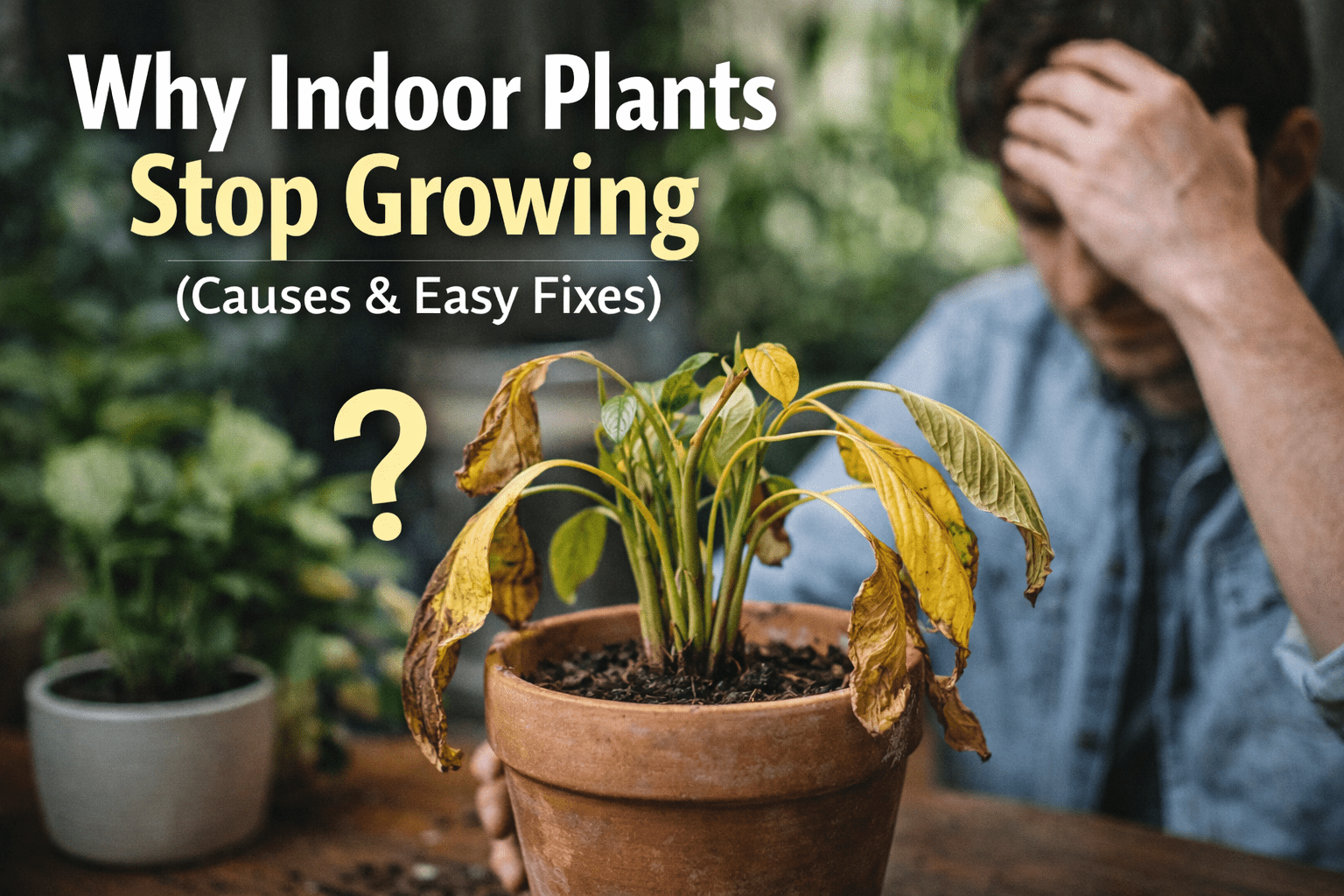
Why Indoor Plants Stop Growing (Causes & Easy Fixes)
If you’ve noticed your indoor plant not growing, you’re not alone. Many beginners wonder why indoor plants stop growing, especially when they seem to be following the right care routine.
The good news is that most houseplant growth problems are easy to identify and fix once you understand the cause. Some plants naturally grow faster — these fast growing indoor plants are great beginner-friendly options.
If you’re just getting started, this indoor plant care guide explains the basics that support healthy plant growth.
Is It Normal for Indoor Plants to Stop Growing?
Yes, in some cases.
Slow plant growth indoor is common during seasonal changes, particularly in winter when light levels and temperatures drop. However, if your indoor plant is not growing for an extended period, it usually indicates a care-related issue. Environmental factors like temperature also affect growth, which is explained in this guide on ideal temperature for indoor plants.
Common Reasons Why Indoor Plants Stop Growing
Below are the most common causes of houseplant growth problems and how to fix them
1. Lack of Proper Light
One of the main reasons why indoor plants stop growing is insufficient light.
Plants rely on light to produce energy. Without enough light, growth slows down or stops completely.
If your space has limited sunlight, this guide on indoor plants that don’t need sunlight helps you choose suitable plants.
2. Incorrect Watering Routine
Improper watering is another major cause of slow plant growth indoor.
- Overwatering can damage roots
- Underwatering can prevent nutrient absorption
If you are unsure about watering frequency, this guide on how often to water indoor plants helps you maintain consistency.
3. Poor Soil Conditions
If your indoor plant is not growing, the soil may not be supporting healthy roots.
Over time, soil can become compacted or lose nutrients, which affects growth.
This guide on best soil for indoor plants explains how to choose the right mix.
4. Lack of Nutrients
If you are asking why my plant is not growing new leaves, nutrient deficiency may be the cause.
Plants require nutrients to produce new growth. Without proper feeding, growth can slow significantly.
This guide on when and how to fertilize indoor plants explains how to provide nutrients safely.
5. Roots Outgrowing the Pot
Sometimes growth stops because roots no longer have space.
When roots become crowded, the plant cannot expand further.
Repotting can solve this issue. Learn more in this guide on how to repot indoor plants.
6. Environmental Stress
Changes in the environment can lead to houseplant growth problems.
Common factors include:
- Low humidity
- Temperature fluctuations
- Sudden relocation
If the air in your home is dry, this guide on how to increase humidity for indoor plants can help improve conditions.
7. Seasonal Growth Changes
Plants naturally grow slower during colder months.
This is normal and does not always indicate a problem.
Understanding indoor plant care in winter helps you adjust your expectations and care routine.
Signs Your Indoor Plant Is Not Growing Properly
If you are unsure whether your plant has stopped growing, look for these signs:
- No new leaves over several weeks
- Smaller or weaker new growth
- Yellowing leaves
- Drooping stems
If leaves are changing color, this guide explains why plant leaves turn yellow and how to address it.
How to Fix Plant Growth Problems
If you are trying to understand how to fix plant growth problems, start with these steps:
- Improve light exposure
- Adjust watering habits
- Refresh or replace soil if needed
- Fertilize during active growth
- Repot when roots become crowded
Most issues can be resolved with small, consistent changes.
FAQ:
If your indoor plant is not growing new leaves, it is usually due to low light, lack of nutrients, or incorrect watering. Plants need proper light and nutrients to produce new growth. Check these factors and adjust your care routine gradually.
Yes, slow plant growth indoor is normal during certain seasons, especially in winter. Plants grow more slowly when light and temperature levels are lower. However, if growth stops completely for a long time, it may indicate a care issue.
The most common houseplant growth problems include:
Overwatering or underwatering
Poor lighting conditions
Lack of nutrients
Incorrect soil
Root crowding
Identifying the cause early helps fix the issue quickly.
To fix an indoor plant not growing:
Move it to a brighter location
Check and adjust watering
Use fresh, well-draining soil
Fertilize during the growing season
Repot if roots are crowded
These steps usually restore healthy growth.
Yes, overwatering can stop plant growth. Excess water damages roots and prevents them from absorbing oxygen and nutrients, which slows down or stops growth completely.
Plants grow faster in summer because of more light and warmth. In winter, lower light levels and cooler temperatures slow down plant growth. This is a natural cycle for most indoor plants.
Once the issue is fixed, most plants start showing improvement within a few weeks. New leaves and steady growth are signs that the plant is recovering.
Final Thoughts
Understanding why indoor plants stop growing helps you identify problems early and take the right action.
Most indoor plant issues are not permanent. With proper care and adjustments, your plant can return to healthy growth.
Consistency and observation are key to long-term success.
I am the creator of LeafyAbode, a platform dedicated to helping people grow and care for indoor plants with confidence. I share practical, easy-to-follow guides on plant care, home gardening, and creating a green living space. My content is based on research, real experience, and a passion for making plant care simple for beginners and enthusiasts alike.
Post Disclaimer
The information contained in this post is for general information purposes only. The information is provided by Why Indoor Plants Stop Growing (Causes & Easy Fixes) and while we endeavour to keep the information up to date and correct, we make no representations or warranties of any kind, express or implied, about the completeness, accuracy, reliability, suitability or availability with respect to the website or the information, products, services, or related graphics contained on the post for any purpose.
8 thoughts on “Why Indoor Plants Stop Growing (Causes & Easy Fixes)”