
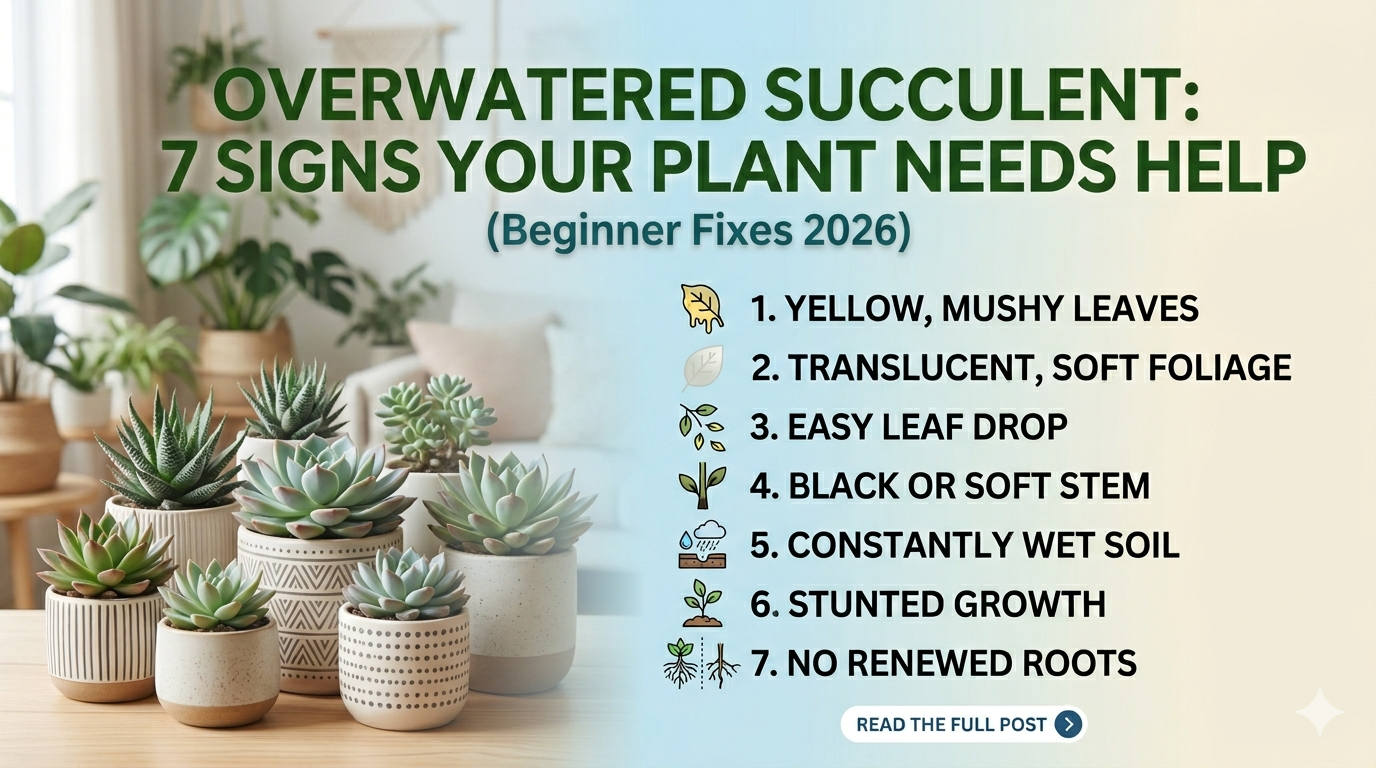
Overwatered Succulent? 7 Signs Your Plant Needs Help (Beginner Fixes 2026)
Succulents are often called low-maintenance plants, but that reputation sometimes creates the biggest problem of all — overwatering.
Many beginners assume indoor succulents need regular watering like other houseplants. In reality, most succulent problems indoors happen because the soil stays wet for too long, especially in homes with limited airflow or lower sunlight.
An overwatered succulent can decline surprisingly fast. Leaves may turn soft, stems can become mushy, and roots may begin rotting below the surface before the damage is even visible.
The good news is that many succulents can recover if the problem is caught early.
This guide explains the most common signs of overwatering, why it happens indoors, and how to save an overwatered succulent before the damage becomes permanent.
Why Succulents Get Overwatered So Easily Indoors
One thing many beginners don’t realize is that indoor conditions slow down soil drying much more than outdoor environments.
Inside homes:
- airflow is lower
- sunlight is weaker
- humidity changes differently
- pots dry more slowly
Because of this, watering schedules that work outdoors often fail indoors.
A succulent that needs watering every few days outside may only need water every couple of weeks indoors depending on:
- sunlight
- pot size
- soil type
- temperature
- drainage
This is one reason why indoor succulent care is often more about restraint than constant attention.
1. Mushy or Soft Leaves
One of the earliest signs of an overwatered succulent is soft leaves.
Healthy succulent leaves usually feel:
- firm
- plump
- slightly rigid
Overwatered leaves often become:
- mushy
- translucent
- swollen
- weak to the touch
In some cases, leaves may even burst or split from excess moisture stored inside the plant.
This usually happens because roots can no longer regulate water properly once they begin struggling in soggy soil.
2. Yellow or Transparent Leaves
Succulent leaves naturally age over time, but widespread yellowing is often a warning sign.
Overwatered succulents may develop:
- pale leaves
- yellow lower leaves
- translucent patches
- water-soaked appearance
Many beginners mistake this for underwatering and accidentally water even more, which usually worsens the problem.
3. Leaves Falling Off Easily
Healthy succulent leaves generally stay attached firmly to the stem.
If leaves fall off with very little pressure, excess moisture may be damaging the plant internally.
This often happens when:
- roots remain wet too long
- soil drains poorly
- watering happens too frequently
Overwatered succulent leaves usually fall off while still soft rather than dry or shriveled.
4. Black Spots or Stem Rot
Dark spots near the base of the plant are one of the more serious signs of overwatering.
As excess moisture builds inside the soil, fungal problems and root rot become more likely.
You may notice:
- black stems
- brown mushy areas
- foul smell from soil
- collapsing leaves
At this stage, fast action becomes important because rot can spread quickly through succulent tissue.
This guide on how to fix root rot in indoor plants explains how excess moisture damages plant roots.
5. Soil Staying Wet for Too Long
A healthy succulent soil mix should dry relatively quickly between watering sessions.
If the soil still feels damp several days later, the problem may be:
- poor drainage
- heavy soil
- lack of sunlight
- oversized pots
One common beginner mistake is using standard potting soil without adding drainage materials.
This guide on best soil for indoor plants explains why loose well-draining soil matters so much indoors.
6. Mold or Fungus Gnats Around the Pot
Excessively wet soil often creates an environment where fungus gnats and mold begin appearing.
Small flying insects around the soil surface are usually a sign that moisture is remaining trapped too long.
Healthy succulent soil rarely stays consistently wet enough to support these problems.
7. Stretched Weak Growth
Interestingly, many overwatered succulents are also suffering from insufficient light at the same time.
Low light slows evaporation and weakens growth, making the plant more vulnerable to moisture-related stress.
You may notice:
- stretched stems
- leaning growth
- pale leaves
- weak compactness
This combination is extremely common in indoor succulents kept far from windows.
How to Save an Overwatered Succulent
The recovery process depends on how severe the damage has become.
In many cases, early-stage overwatering can be fixed fairly easily.
Stop Watering Immediately
The first step is simply allowing the soil to dry properly.
Many beginners continue watering because the plant “looks unhealthy,” which often makes things worse.
Move the Plant to Brighter Light
More light helps:
- increase evaporation
- improve growth
- dry soil faster
Avoid sudden harsh sunlight if the succulent has been sitting in low light for a long time.
Gradual adjustment usually works best.
Check the Roots
If the plant continues declining, gently remove it from the pot and inspect the roots.
Healthy roots are usually:
- light colored
- firm
- dry to slightly moist
Rotten roots often appear:
- dark
- mushy
- foul smelling
Trim damaged roots carefully before repotting. Repotting into fresh, well-draining soil is often an important step in recovery. Read our How to Repot Succulents guide for detailed instructions.
Replace Wet Compact Soil
Heavy moisture-retaining soil is one of the biggest causes of succulent root problems indoors.
Repotting into:
- gritty soil
- succulent mix
- perlite-enhanced soil
often improves recovery significantly.
This guide on how to care for succulents indoors explains proper succulent soil and watering basics in more detail.
Use Pots With Drainage Holes
Without drainage, even careful watering can become risky over time.
This guide on do indoor plants need drainage holes explains why drainage matters so much for indoor plants.
How Often Should You Water Succulents Indoors?
There is no perfect universal schedule because indoor conditions vary so much between homes.
Instead of watering on fixed calendar days, it’s safer to:
- check soil dryness
- observe leaf firmness
- monitor sunlight conditions
In brighter warmer rooms, succulents may dry faster than in cool shaded spaces.
This guide on how often to water indoor plants explains how watering frequency changes indoors.
Common Beginner Mistakes
A lot of succulent problems indoors come from a few repeated habits.
The most common include:
- watering too frequently
- using pots without drainage
- keeping succulents in dark rooms
- using compact soil
- misting succulents excessively
Ironically, succulents usually grow best when they are left alone more often.
Can Overwatered Succulents Recover?
Yes — many succulents recover surprisingly well if the issue is caught early.
Plants with healthy stems and partially healthy roots often bounce back once:
- watering improves
- soil drains properly
- light conditions improve
However, severe rot spreading through the stem can sometimes become irreversible.
That’s why recognizing early signs matters so much.
Final Thoughts
Overwatering is one of the most common reasons indoor succulents struggle, especially for beginners trying to care for plants too frequently. Learn about how often should you water succulents?
The key is understanding that succulents prefer periods of dryness between watering rather than constantly moist soil.
In many homes, improving:
- drainage
- soil quality
- lighting
- watering habits
makes a dramatic difference in succulent health within a few weeks.
Once proper care routines become consistent, succulents are often some of the easiest and most rewarding indoor plants to grow.
FAQ
What does an overwatered succulent look like?
An overwatered succulent often develops:
- mushy leaves
- yellowing
- soft stems
- leaf drop
- black spots near the base
Can an overwatered succulent recover?
Yes, many succulents recover if overwatering is corrected early and damaged roots are removed if necessary.
How long should succulent soil stay wet?
Succulent soil should not remain wet for long periods. Healthy succulent soil usually dries between watering sessions.
Why are my succulent leaves falling off?
Leaves commonly fall off because of:
- overwatering
- poor drainage
- root stress
- low light combined with wet soil

I am the creator of LeafyAbode, a platform dedicated to helping people grow and care for indoor plants with confidence. I share practical, easy-to-follow guides on plant care, home gardening, and creating a green living space. My content is based on research, real experience, and a passion for making plant care simple for beginners and enthusiasts alike.
Post Disclaimer
The information contained in this post is for general information purposes only. The information is provided by Overwatered Succulent? 7 Signs Your Plant Needs Help (Beginner Fixes 2026) and while we endeavour to keep the information up to date and correct, we make no representations or warranties of any kind, express or implied, about the completeness, accuracy, reliability, suitability or availability with respect to the website or the information, products, services, or related graphics contained on the post for any purpose.
6 thoughts on “Overwatered Succulent? 7 Signs Your Plant Needs Help (Beginner Fixes 2026)”