
How to Fix Root Rot in Indoor Plants (Step-by-Step Guide)
Root rot is one of the most common problems in indoor plants. It usually happens when plants sit in wet soil for too long, which prevents roots from getting enough oxygen.
The good news is that root rot can often be fixed if you act early and follow the right steps.
If you’re new to plant care, this indoor plant care guide explains the basics of keeping plants healthy.
What Is Root Rot?
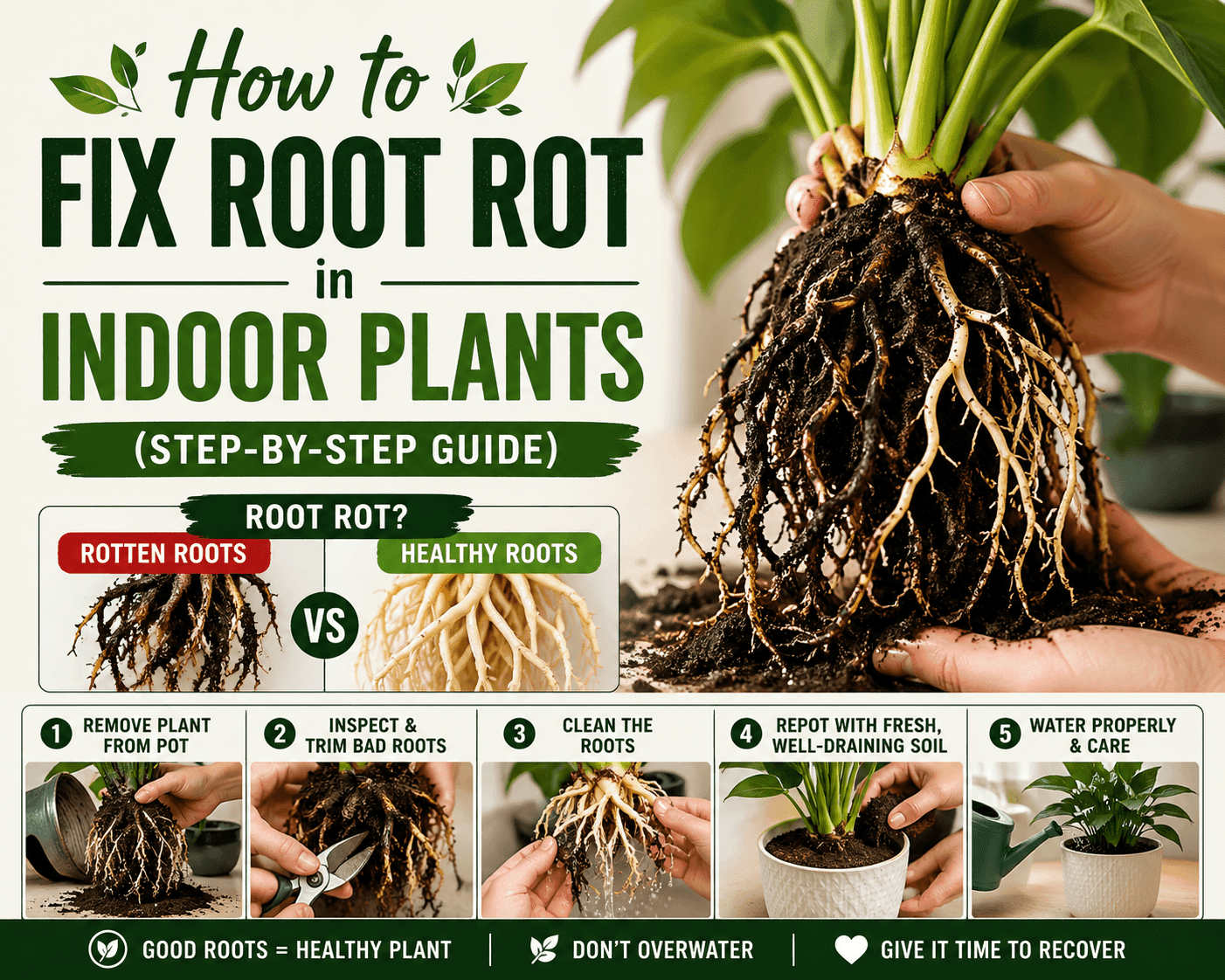
Root rot is a condition where plant roots start to decay due to excess moisture in the soil. Healthy roots are firm and light in color, while rotting roots become soft, dark, and mushy.
This problem is commonly linked to overwatering or poor drainage.
Signs of Root Rot in Indoor Plants
Early detection is important. Look for these root rot symptoms in indoor plants:
- Yellowing leaves
- Drooping even when soil is wet
- Soft or mushy stems
- Foul smell from soil
- Slow or stopped growth
If your plant has stopped growing, this guide on why indoor plants stop growing can help identify related issues.
What Causes Root Rot?
Root rot is usually caused by:
- Overwatering
- Poor drainage
- Compact soil
- Pots without drainage holes
Understanding how often to water indoor plants helps prevent excess watering.
Also, learn why indoor plants need drainage holes to avoid water buildup.
Step-by-Step: How to Fix Root Rot
Step 1: Remove the Plant from the Pot
Gently take the plant out and shake off excess soil.
Step 2: Inspect the Roots
Check for:
- Black or brown roots
- Mushy texture
- Unpleasant smell
Healthy roots should be firm and white.
Step 3: Trim Damaged Roots
Use clean scissors to remove all affected roots.
Cut until only healthy roots remain.
Step 4: Replace the Soil
Discard old soil and use fresh, well-draining soil.
This guide on best soil for indoor plants helps you choose the right mix.
Step 5: Repot the Plant
Use a clean pot with drainage holes.
If needed, this guide on how to repot indoor plants explains the process.
Step 6: Adjust Watering Routine
After repotting:
- Water lightly
- Let soil dry slightly before next watering
Learning how often to water indoor plants helps prevent the problem from returning.
Can a Plant Recover from Root Rot?
Yes, many plants can recover if the damage is not too severe.
Recovery depends on:
- How early you treat it
- How much root damage occurred
- Proper aftercare
Most plants start improving within a few weeks.
How to Prevent Root Rot
Prevention is easier than treatment.
- Avoid overwatering
- Use well-draining soil
- Ensure proper drainage
- Monitor plant regularly
If you’re unsure, this guide on indoor plant care mistakes beginners make helps avoid common errors.
Final Thoughts
Root rot is a common issue, but it can be fixed with the right steps. By identifying the problem early and adjusting your care routine, you can save your plant and prevent future issues.
Consistent care and proper watering habits are key to keeping roots healthy.

I am the creator of LeafyAbode, a platform dedicated to helping people grow and care for indoor plants with confidence. I share practical, easy-to-follow guides on plant care, home gardening, and creating a green living space. My content is based on research, real experience, and a passion for making plant care simple for beginners and enthusiasts alike.
Post Disclaimer
The information contained in this post is for general information purposes only. The information is provided by How to Fix Root Rot in Indoor Plants (Step-by-Step Guide) and while we endeavour to keep the information up to date and correct, we make no representations or warranties of any kind, express or implied, about the completeness, accuracy, reliability, suitability or availability with respect to the website or the information, products, services, or related graphics contained on the post for any purpose.
2 thoughts on “How to Fix Root Rot in Indoor Plants (Step-by-Step Guide)”