
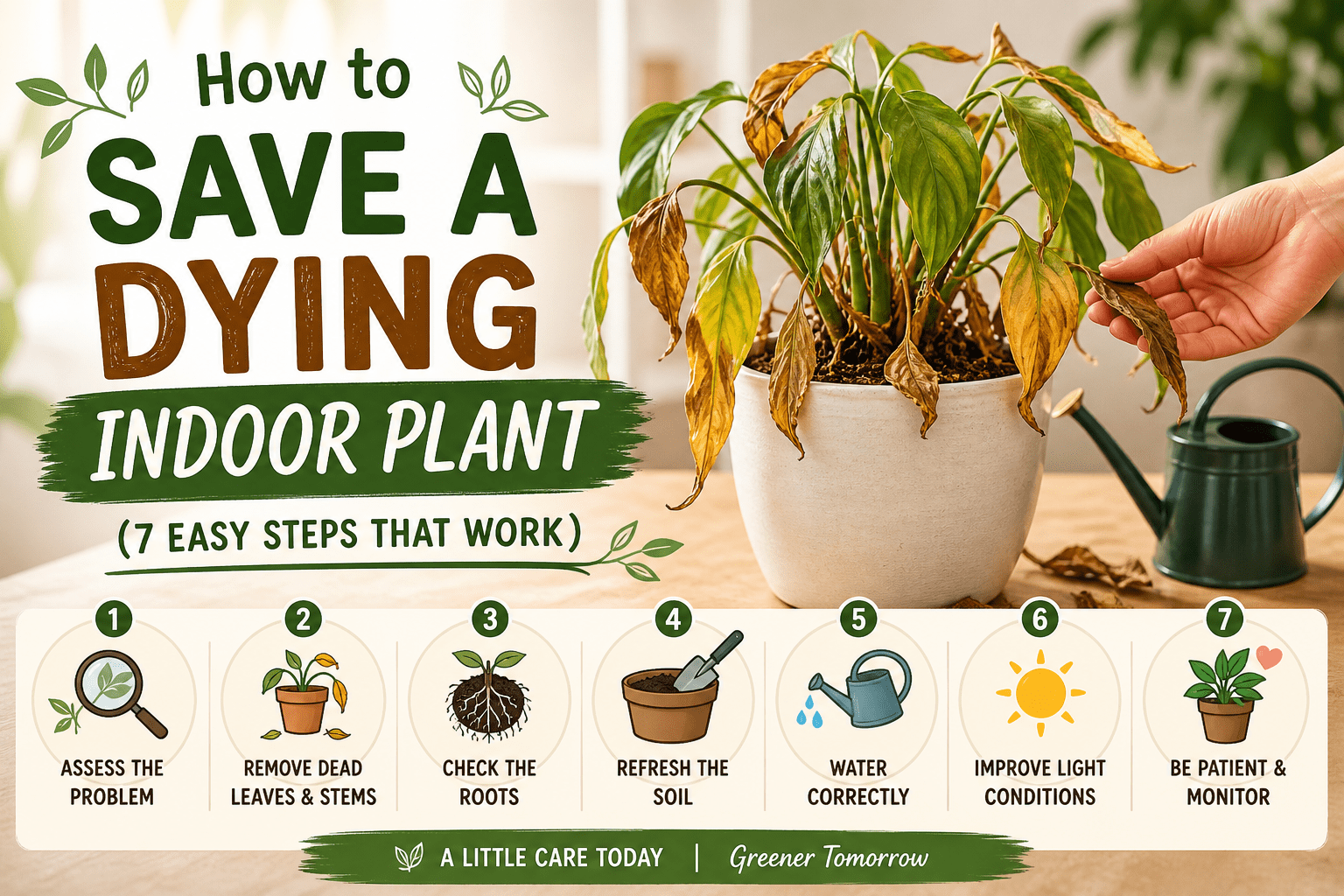
Is Your Indoor Plant Dying? 7 Easy Ways to Save It Fast
Seeing your indoor plant start to decline can be frustrating. Leaves may turn yellow, growth may stop, or the plant may begin to droop.
The good news is that many plants can recover if the problem is identified early and treated properly.
If you’re new to plant care, this indoor plant care guide explains the basics of keeping plants healthy.
Signs Your Indoor Plant Is Dying
Before taking action, it’s important to identify the signs:
- Yellow or brown leaves
- Drooping stems
- No new growth
- Dry or soggy soil
- Leaf drop
If you’re unsure whether your plant is healthy or not, this guide on signs your indoor plant is healthy helps you compare.
Step 1: Identify the Problem
The first step is understanding why your plant is struggling.
Common causes include:
- Overwatering
- Underwatering
- Poor light conditions
- Nutrient deficiency
- Root damage
This guide on why indoor plants stop growing explains deeper causes.
Step 2: Check the Soil Moisture
Touch the soil before watering.
- If soil is soggy → reduce watering
- If soil is dry → water gradually
Learning how often to water indoor plants helps correct watering issues.
Step 3: Inspect the Roots
Remove the plant gently and check roots.
- Healthy roots → white and firm
- Damaged roots → dark, mushy
If you notice root damage, this guide on how to fix root rot in indoor plants explains how to treat it.
Step 4: Adjust Light Conditions
Light plays a major role in recovery.
- Move plant to bright indirect light
- Avoid sudden exposure to harsh sunlight
If your home has low light, this guide on indoor plants that don’t need sunlight helps you choose better options.
Step 5: Improve Soil and Drainage
Poor soil can slow recovery.
- Use fresh, well-draining soil
- Ensure pot has drainage holes
This guide on best soil for indoor plants helps you choose the right mix.
Step 6: Remove Damaged Leaves
Trim dead or severely damaged leaves.
This helps the plant focus energy on new growth.
Step 7: Adjust Fertilizing
Avoid fertilizing immediately after stress.
Once the plant stabilizes, use a balanced fertilizer.
This guide on how often to fertilize indoor plants explains proper feeding.
Can a Dying Plant Recover?
Yes, many plants can recover if treated early.
Recovery depends on:
- Severity of damage
- Speed of action
- Proper care adjustments
Most plants show improvement within a few weeks.
Common Mistakes to Avoid
- Overwatering repeatedly
- Moving plants too frequently
- Ignoring root health
- Over-fertilizing
If you’re unsure, this guide on indoor plant care mistakes beginners make helps avoid common issues.
Final Thoughts
Saving a dying indoor plant is possible with the right approach. By identifying the problem early and making small adjustments, you can help your plant recover and grow again.
Consistent care and observation are key to long-term plant health.

I am the creator of LeafyAbode, a platform dedicated to helping people grow and care for indoor plants with confidence. I share practical, easy-to-follow guides on plant care, home gardening, and creating a green living space. My content is based on research, real experience, and a passion for making plant care simple for beginners and enthusiasts alike.
Post Disclaimer
The information contained in this post is for general information purposes only. The information is provided by How to Save a Dying Indoor Plant (7 Easy Steps That Work) and while we endeavour to keep the information up to date and correct, we make no representations or warranties of any kind, express or implied, about the completeness, accuracy, reliability, suitability or availability with respect to the website or the information, products, services, or related graphics contained on the post for any purpose.
1 thought on “How to Save a Dying Indoor Plant (7 Easy Steps That Work)”