
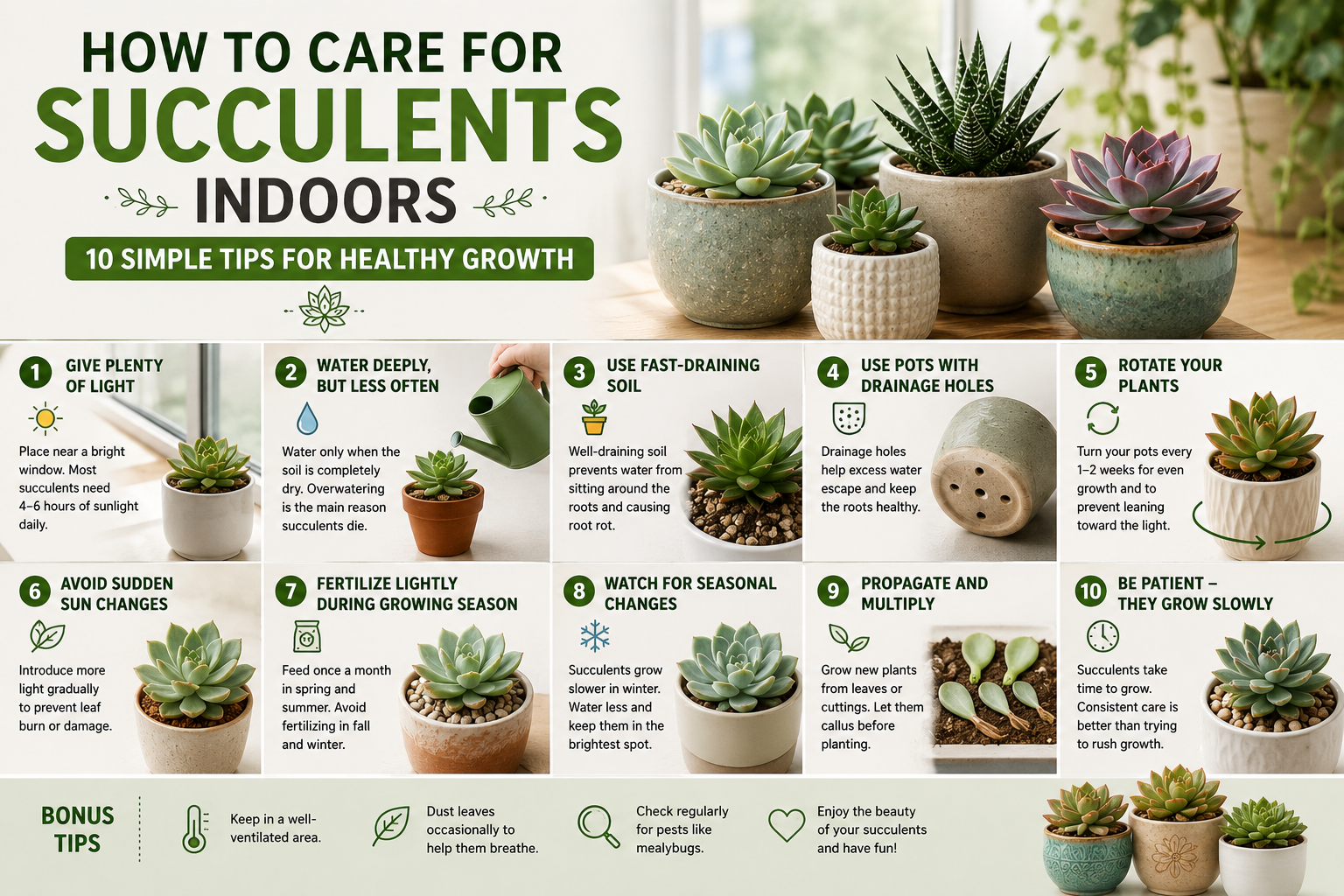
How to Care for Succulents Indoors: 10 Simple Tips for Healthy Growth (Beginner Guide 2026)
Succulents are often recommended as “easy plants,” but many beginners quickly discover that keeping them alive indoors is not always as simple as it sounds. One of the biggest reasons is that succulent care advice online is often too generic. What works outdoors in bright climates does not always work inside apartments or homes with limited sunlight. If your succulent is stretching or leaning toward a window, our guide to how much light succulents need can help you find a better location.
The good news is that succulents can grow extremely well indoors once you understand a few basic care principles. In fact, many indoor succulent problems come from doing too much rather than too little.
If you’ve recently bought your first succulent or you’re trying to revive one that’s struggling, this guide covers the most important things beginners should know about succulent care indoors.
Why Succulents Are So Popular Indoors
Succulents have become one of the most popular indoor plants over the last few years, especially among beginners and apartment owners.
People love them because they:
- require less frequent watering
- fit small indoor spaces
- come in many unique shapes and colors
- work well on desks, shelves, and windowsills
- generally need less maintenance than tropical houseplants
They’re also visually versatile. A single small succulent can brighten a workspace, while larger arrangements can completely change the feel of a room.
1. Give Succulents More Light Than You Think
One of the most common succulent care mistakes is keeping them in dark corners.
Many beginners hear that succulents are “low maintenance” and assume they grow well without much light. In reality, most succulent plants care indoor routines fail because the plant simply is not getting enough sunlight.
In most homes, succulents grow best:
- near south or east-facing windows
- in bright indirect light
- with several hours of sunlight daily
Signs your succulent may need more light:
- stretched stems
- leaning growth
- pale leaves
- wider spacing between leaves
If your home has very limited sunlight, this guide on indoor plants that don’t need sunlight explains which plants adapt better to lower light conditions.
2. Overwatering Is the Biggest Succulent Killer
A lot of beginners assume succulents need frequent watering because they are kept indoors. Ironically, most overwatered succulent problems happen because people care too much.
Succulents store water inside their leaves, which means they usually prefer soil to dry between watering sessions. One of the biggest beginner mistakes is watering too often. These common signs of an overwatered succulent can help you spot problems early before root damage spreads.
Instead of watering on a fixed schedule, it’s better to:
- check the soil first
- water deeply when dry
- avoid keeping soil constantly damp
One practical habit many experienced plant owners follow is lifting the pot occasionally. Dry succulent pots often feel noticeably lighter than wet ones.
Common signs of an overwatered succulent include:
- mushy leaves
- black spots
- soft stems
- yellowing leaves
- leaf drop
This guide on how often to water indoor plants explains how watering needs change indoors.
3. Use Fast-Draining Soil
Soil quality matters far more for succulents than many beginners realize.
Heavy compact soil traps moisture around roots for too long, especially indoors where airflow is weaker.
The best succulent soil usually feels:
- loose
- gritty
- airy
- fast draining
Many indoor gardeners mix:
- potting soil
- perlite
- coarse sand
to improve drainage naturally.
This guide on best soil for indoor plants explains how healthy soil affects root health and plant growth.
4. Always Use Pots With Drainage Holes
Even the best succulent soil struggles inside containers without drainage.
Water trapped at the bottom of pots is one of the fastest ways to damage succulent roots indoors.
Drainage holes help:
- excess moisture escape
- reduce root rot risk
- improve airflow inside the pot
Decorative pots without drainage may look attractive, but they often create problems over time if watering is not carefully controlled.
This guide on do indoor plants need drainage holes explains why drainage matters for indoor plants.
5. Rotate Succulents Occasionally
Indoor succulents naturally grow toward light sources.
If the plant always faces the same direction, growth may become uneven or stretched.
Rotating the pot every week or two usually helps:
- maintain balanced growth
- improve shape
- prevent leaning
This small habit makes a surprisingly noticeable difference over time.
6. Avoid Sudden Sunlight Changes
Many people accidentally damage succulents by moving them directly from low light into harsh afternoon sun.
Succulent leaves can burn surprisingly quickly during sudden environmental changes.
If you want to increase sunlight exposure:
- do it gradually
- increase light slowly over several days
- watch for leaf discoloration
Indoor plants generally adapt better when environmental changes happen slowly.
7. Indoor Succulents Need Less Fertilizer
Unlike fast-growing tropical plants, succulents usually do not require heavy feeding.
In many homes, light fertilizing once or twice during active growth seasons is enough.
Over-fertilizing can sometimes cause:
- weak growth
- stretched stems
- poor leaf structure
This guide on how often to fertilize indoor plants explains simple beginner-friendly fertilizing routines.
8. Watch for Seasonal Growth Changes
One thing beginners often misunderstand is that succulents do not always grow consistently year-round.
Many succulent varieties naturally slow down during:
- winter
- lower light months
- cooler temperatures
That doesn’t necessarily mean the plant is unhealthy.
This guide on indoor plant care in winter explains how indoor conditions affect plant growth during colder seasons.
9. Propagating Succulents Is Easier Than Most People Think
One reason succulent plants are so addictive for beginners is how easy they can be to propagate.
Many succulents can grow from:
- leaf cuttings
- stem cuttings
- offsets
This process is commonly called propagating succulents or rooting succulents.
Healthy leaves placed on dry soil often begin producing tiny roots over time.
Propagation usually works best when:
- leaves are healthy
- soil drains well
- watering stays light initially
This could later become a strong standalone cluster article for your site because succulent propagation has excellent search demand.
10. Healthy Succulents Usually Grow Slowly
Many beginners worry when succulents do not grow rapidly.
In reality, most succulents naturally grow more slowly than tropical houseplants.
A healthy succulent often shows:
- compact growth
- firm leaves
- stable color
- gradual new leaf development
Fast growth is not always a sign of health. In fact, stretched rapid growth indoors usually indicates insufficient light.
Common Indoor Succulent Problems
Most succulent care issues indoors usually come down to a few repeated mistakes:
- poor lighting
- overwatering
- compact soil
- lack of drainage
- sudden environmental changes
Once these issues are corrected, succulents often recover surprisingly well.
If your plant already looks unhealthy, this guide on how to save a dying indoor plant explains how to identify and fix common plant stress problems.
Best Succulents for Beginners
Some succulents adapt better to indoor life than others.
Beginner-friendly options include:
- aloe vera succulent
- jade plant
- echeveria
- haworthia
- zebra succulent
These varieties are usually more forgiving while beginners learn proper succulent care routines.
Final Thoughts
Learning how to care for succulents indoors becomes much easier once you understand that these plants usually prefer stability and restraint rather than constant attention.
Most indoor succulent problems happen because of:
- too much water
- poor lighting
- heavy soil
not because the plant is difficult to grow.
With proper light, fast-draining soil, and careful watering, succulents can thrive indoors for years while remaining one of the easiest and most rewarding plants for beginners.
FAQ
How often should I water succulents indoors?
Most indoor succulents prefer watering only after the soil becomes dry. Watering frequency depends on light, temperature, and airflow inside the home. You may refer to the complete guide on how often should you water succulents?
Why is my succulent dying indoors?
The most common causes are:
- overwatering
- insufficient light
- poor drainage
- compact soil
Do succulents need direct sunlight?
Most succulents prefer several hours of bright light daily, although harsh sudden sunlight can sometimes damage indoor plants.
What is the best soil for succulents?
Succulents usually grow best in loose, fast-draining soil that prevents excess moisture around roots.

I am the creator of LeafyAbode, a platform dedicated to helping people grow and care for indoor plants with confidence. I share practical, easy-to-follow guides on plant care, home gardening, and creating a green living space. My content is based on research, real experience, and a passion for making plant care simple for beginners and enthusiasts alike.
Post Disclaimer
The information contained in this post is for general information purposes only. The information is provided by How to Care for Succulents Indoors: 10 Simple Tips for Healthy Growth (Beginner Guide 2026) and while we endeavour to keep the information up to date and correct, we make no representations or warranties of any kind, express or implied, about the completeness, accuracy, reliability, suitability or availability with respect to the website or the information, products, services, or related graphics contained on the post for any purpose.
3 thoughts on “How to Care for Succulents Indoors: 10 Simple Tips for Healthy Growth (Beginner Guide 2026)”