
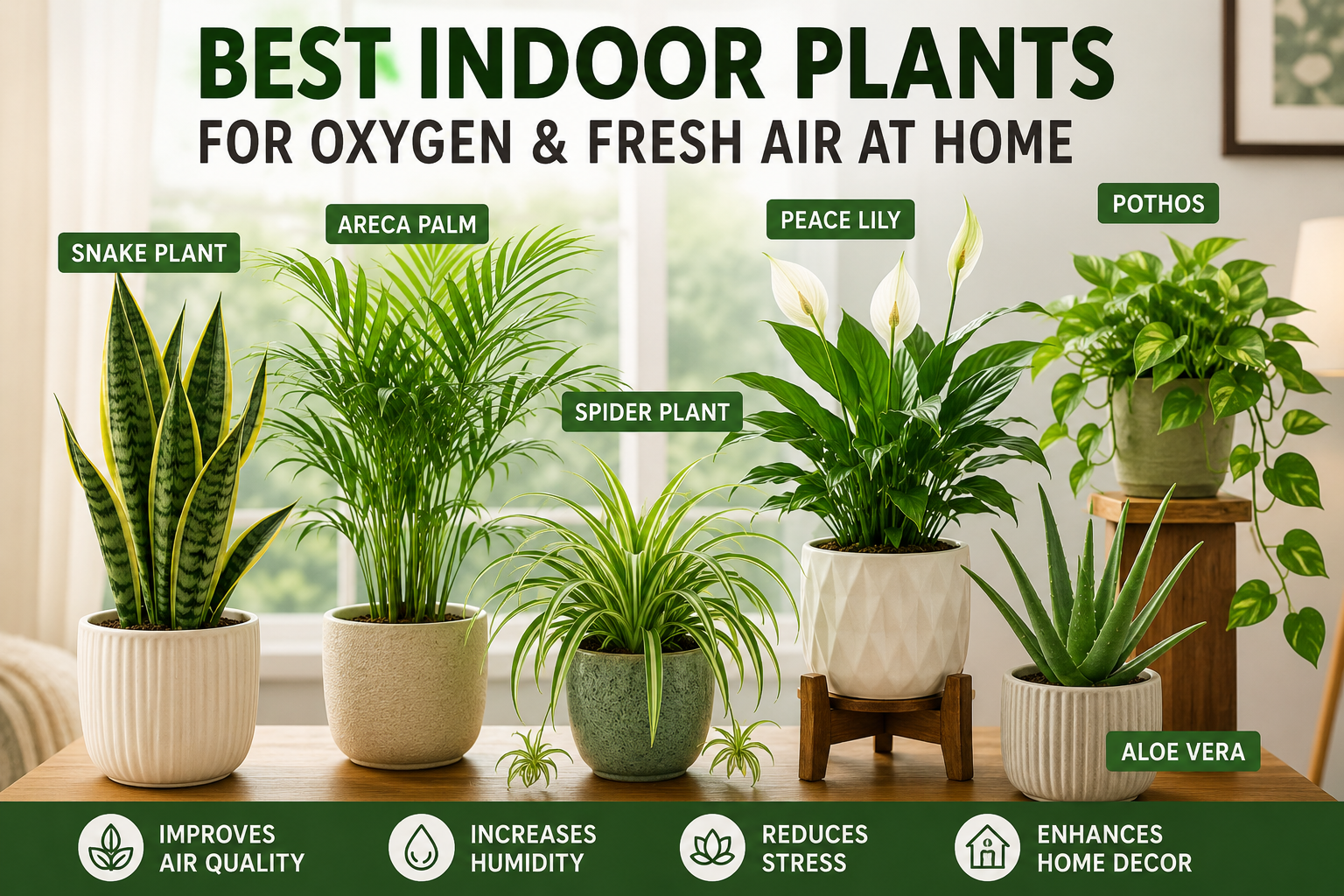
Best Indoor Plants for Oxygen and Fresh Air at Home
A home instantly feels different when there are healthy indoor plants around. Even a small corner with greenery can make a room feel calmer, fresher, and more inviting.
Over the past few years, many people have started searching for the best indoor plants for oxygen and cleaner indoor spaces, especially in apartments and homes where windows often remain closed for long periods.
While indoor plants are not a replacement for proper ventilation or air purifiers, they can still contribute to a more comfortable indoor environment. Some plants may help improve humidity levels, reduce the dry feeling caused by air conditioning, and make indoor spaces feel naturally fresher.
The biggest advantage is that many of these plants are surprisingly easy to maintain, even for beginners.
Why Indoor Plants Make Homes Feel Fresher
One thing many plant owners notice after adding greenery indoors is how much softer and more relaxing a room starts to feel.
Plants naturally add life to indoor spaces through:
- greenery and texture
- natural humidity
- visual calmness
- improved atmosphere
This is one reason why indoor plants for fresh air and oxygen have become popular in bedrooms, workspaces, and living rooms.
In smaller apartments especially, indoor plants can make a space feel far less dull or closed off.
Best Indoor Plants for Oxygen at Home
Some houseplants adapt especially well to indoor environments and are commonly chosen for creating fresher, greener spaces.
Snake Plant
Snake plants are often recommended for people who want something low maintenance but visually attractive.
Their upright leaves work well in:
- bedrooms
- corners
- small apartments
- office desks
One reason beginners like snake plants is because they tolerate occasional neglect much better than many tropical plants.
They usually do well with:
- indirect light
- lighter watering
- stable indoor temperatures
If you have pets at home, it’s worth reading this guide on are snake plants toxic to pets before adding one indoors.
Areca Palm
Areca palms bring a softer tropical look into indoor spaces.
Their larger foliage makes rooms feel greener almost instantly, which is why they are commonly placed in:
- living rooms
- bright corners
- near windows with filtered sunlight
In many homes, areca palms also help dry indoor spaces feel slightly more comfortable because of the moisture they release naturally over time.
If indoor air feels very dry, especially during summer or AC use, this guide on how to increase humidity for indoor plants explains a few simple ways to improve humidity levels.
Spider Plant
Spider plants are one of the easiest indoor plants to grow successfully.
They adapt well to indoor conditions and often produce baby offshoots once established.
Many beginners enjoy growing spider plants because:
- they grow fairly quickly
- they tolerate small care mistakes
- they fit well in hanging baskets or shelves
Spider plants are also commonly chosen for study rooms and workspaces because they remain compact and easy to manage.
Peace Lily
Peace lilies are popular because of their deep green leaves and white flowers.
They usually prefer:
- indirect light
- slightly moist soil
- stable room temperatures
One practical thing many plant owners appreciate is that peace lilies visibly droop when they need water, making it easier to understand their watering needs over time.
They are often used as indoor plants for bedrooms because of their soft appearance and compact growth.
Pothos
Pothos is one of the most adaptable indoor plants for beginners.
In many homes, pothos quickly becomes the easiest plant to maintain because it grows steadily and adjusts well to different indoor conditions.
People usually keep pothos:
- on shelves
- in hanging pots
- near windows with indirect light
If you enjoy seeing visible plant growth, this guide on fast growing indoor plants explains which plants grow quickly indoors.
Aloe Vera
Aloe vera is often chosen by beginners who want something simple and low maintenance.
It generally prefers:
- brighter indoor light
- well-draining soil
- less frequent watering
Because aloe stores water inside its leaves, it usually handles occasional missed watering better than moisture-loving tropical plants.
Do Indoor Plants Actually Improve Air Quality?
This question comes up very often, and the honest answer is a balanced one.
Indoor plants can absolutely make indoor spaces feel fresher and more relaxing. They may also contribute small improvements to humidity and indoor comfort.
However, they should not be viewed as a complete replacement for:
- fresh airflow
- open ventilation
- air filtration systems
The most realistic approach is thinking of plants as part of a healthier indoor environment rather than expecting dramatic air purification from a few pots alone.
That expectation is both more accurate and more helpful for beginners.
Best Indoor Plants for Bedrooms
Many people specifically search for indoor plants that produce oxygen at night or plants suitable for sleeping areas.
Some commonly chosen bedroom plants include:
- snake plant
- pothos
- peace lily
- spider plant
These plants are usually preferred because they tolerate indoor conditions well without needing constant attention.
This guide on best indoor plants for bedroom explains which plants work especially well in sleeping spaces.
Simple Ways to Keep Indoor Plants Healthy
Even low maintenance plants still need basic care to stay healthy over time.
Avoid Overwatering
One of the most common indoor plant problems is watering too often.
A simple habit many experienced plant owners follow is checking whether the top layer of soil has started drying before watering again.
This guide on how often to water indoor plants explains how watering routines vary between different plants.
Use Soil That Drains Well
Poor soil is one of the biggest hidden causes of indoor plant problems.
Heavy compact soil often traps moisture too long around roots, especially indoors where airflow is limited.
This guide on best soil for indoor plants explains how to choose healthier soil mixes for indoor plants.
Clean Dust From Leaves
Indoor plant leaves naturally collect dust over time, especially near roads or fans.
Wiping leaves occasionally helps plants look healthier and brighter indoors.
This guide on how to clean indoor plant leaves properly explains a simple cleaning routine.
Common Beginner Mistakes
A lot of indoor plant issues happen because of a few repeated beginner mistakes.
Some of the most common include:
- placing plants in very dark corners
- watering too frequently
- using pots without drainage
- moving plants too often
- ignoring humidity and airflow
If your plants seem unhealthy despite regular care, this guide on indoor plant care mistakes beginners make explains what usually goes wrong.
Final Thoughts
The best indoor plants for oxygen and fresh air are usually the ones that naturally fit your indoor environment and lifestyle.
For some people, that may be a large tropical palm in a bright living room. For others, it may simply be a small snake plant beside a bedroom window.
The goal is not finding a “perfect” plant, but choosing plants that are easy to maintain consistently over time.
With healthy soil, proper watering, and stable lighting, indoor plants can make homes feel greener, calmer, and much more enjoyable to live in.
FAQ
Which indoor plant gives the most oxygen?
Snake plants, areca palms, spider plants, and pothos are some of the most commonly recommended indoor plants for fresher indoor spaces.
Are indoor plants good for bedrooms?
Yes, many indoor plants adapt very well to bedrooms, especially low maintenance plants such as snake plants, pothos, and peace lilies.
Do indoor plants really clean the air?
Indoor plants may help improve indoor comfort and humidity levels, but they should not replace proper ventilation or air purifiers.
What are the easiest indoor plants for beginners?
Snake plants, pothos, spider plants, and aloe vera are among the easiest low maintenance indoor plants for beginners.

I am the creator of LeafyAbode, a platform dedicated to helping people grow and care for indoor plants with confidence. I share practical, easy-to-follow guides on plant care, home gardening, and creating a green living space. My content is based on research, real experience, and a passion for making plant care simple for beginners and enthusiasts alike.
Post Disclaimer
The information contained in this post is for general information purposes only. The information is provided by Best Indoor Plants for Oxygen and Fresh Air at Home and while we endeavour to keep the information up to date and correct, we make no representations or warranties of any kind, express or implied, about the completeness, accuracy, reliability, suitability or availability with respect to the website or the information, products, services, or related graphics contained on the post for any purpose.
5 thoughts on “Best Indoor Plants for Oxygen and Fresh Air at Home”