
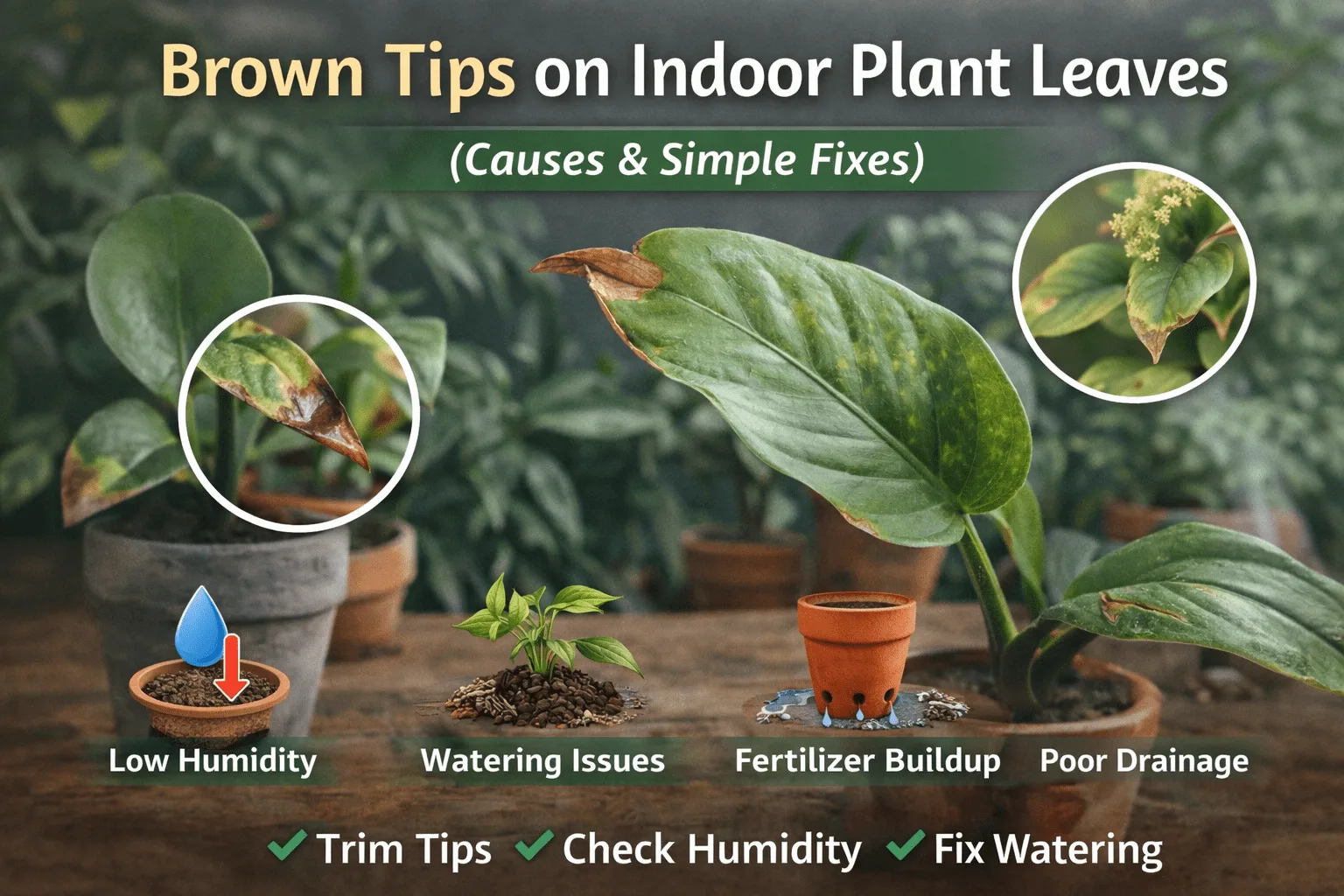
Brown tips on indoor plant leaves are one of the most common concerns for beginners. You may notice the edges turning dry, crispy, or slightly discolored, even when the rest of the plant looks healthy.
Fortunately, brown tips are usually a sign of minor stress rather than permanent damage. Once you understand the cause, fixing the issue becomes much easier.
If you’re still learning plant basics, this indoor plant care guide explains how watering, soil, light, and environment all work together.
Why Do Indoor Plant Leaves Get Brown Tips?
Brown tips usually happen when the plant loses moisture faster than it can replace it. Several factors can cause this imbalance.
The most common causes include:
Low humidity: Dry winter air can make leaf edges turn brown, so adjusting your routine for indoor plant care in winter can help prevent further damage.
Inconsistent watering
Salt buildup from fertilizer
Poor drainage
Tap water minerals
Let’s look at each one.
1. Low Humidity
Many popular indoor plants come from tropical climates. When indoor air becomes too dry, leaf edges begin to dry out first.
This is especially common during winter when heaters reduce air moisture.
If your home feels dry, learning how to increase humidity for indoor plants can prevent further leaf damage.
2. Inconsistent Watering
If soil dries out too much between watering, leaf tips may turn brown.
On the other hand, overwatering can stress roots and prevent proper moisture absorption.
If you’re unsure which issue applies, this guide on overwatering vs underwatering indoor plants helps identify the difference.
You can also review how often to water indoor plants to maintain a balanced routine.
3. Fertilizer Salt Buildup
While fertilizer supports growth, excess use can leave salt residue in the soil. Over time, this buildup affects root function and causes tip burn.
If you recently increased feeding, review when and how to fertilize indoor plants to ensure proper dilution and timing.
4. Poor Drainage
Without proper drainage, excess water remains trapped in the soil. Roots may become stressed, which affects leaf health.
This is why indoor plants need drainage holes to prevent soggy conditions.
5. Tap Water Minerals
Some tap water contains minerals like fluoride or chlorine. Over time, sensitive plants may react with slight browning at the tips.
If this happens, consider letting water sit overnight before use.
How to Fix Brown Tips on Indoor Plants
Fixing brown tips depends on the cause. Start by checking:
Soil moisture
Drainage
Humidity levels
Fertilizer frequency
Trim brown tips gently with clean scissors. This improves appearance but does not fix the root issue — so correct the cause first.
Can Brown Tips Turn Green Again?
Unfortunately, brown tissue does not return to green. However, once conditions improve, new growth should appear healthy.
That’s why early adjustment is important.
How to Prevent Brown Tips in the Future
Maintain consistent watering
Improve humidity if needed
Avoid over-fertilizing
Use pots with drainage holes
Monitor seasonal changes
Small routine adjustments prevent most leaf edge problems.
Final Thoughts
Brown tips on indoor plant leaves are usually manageable. They often signal environmental imbalance rather than serious disease.
By observing soil moisture, humidity, and feeding habits, you can restore steady plant health and prevent future stress.
I am the creator of LeafyAbode, a platform dedicated to helping people grow and care for indoor plants with confidence. I share practical, easy-to-follow guides on plant care, home gardening, and creating a green living space. My content is based on research, real experience, and a passion for making plant care simple for beginners and enthusiasts alike.
Post Disclaimer
The information contained in this post is for general information purposes only. The information is provided by Brown Tips on Indoor Plant Leaves (Causes & Simple Fixes) and while we endeavour to keep the information up to date and correct, we make no representations or warranties of any kind, express or implied, about the completeness, accuracy, reliability, suitability or availability with respect to the website or the information, products, services, or related graphics contained on the post for any purpose.
4 thoughts on “Brown Tips on Indoor Plant Leaves (Causes & Simple Fixes)”