
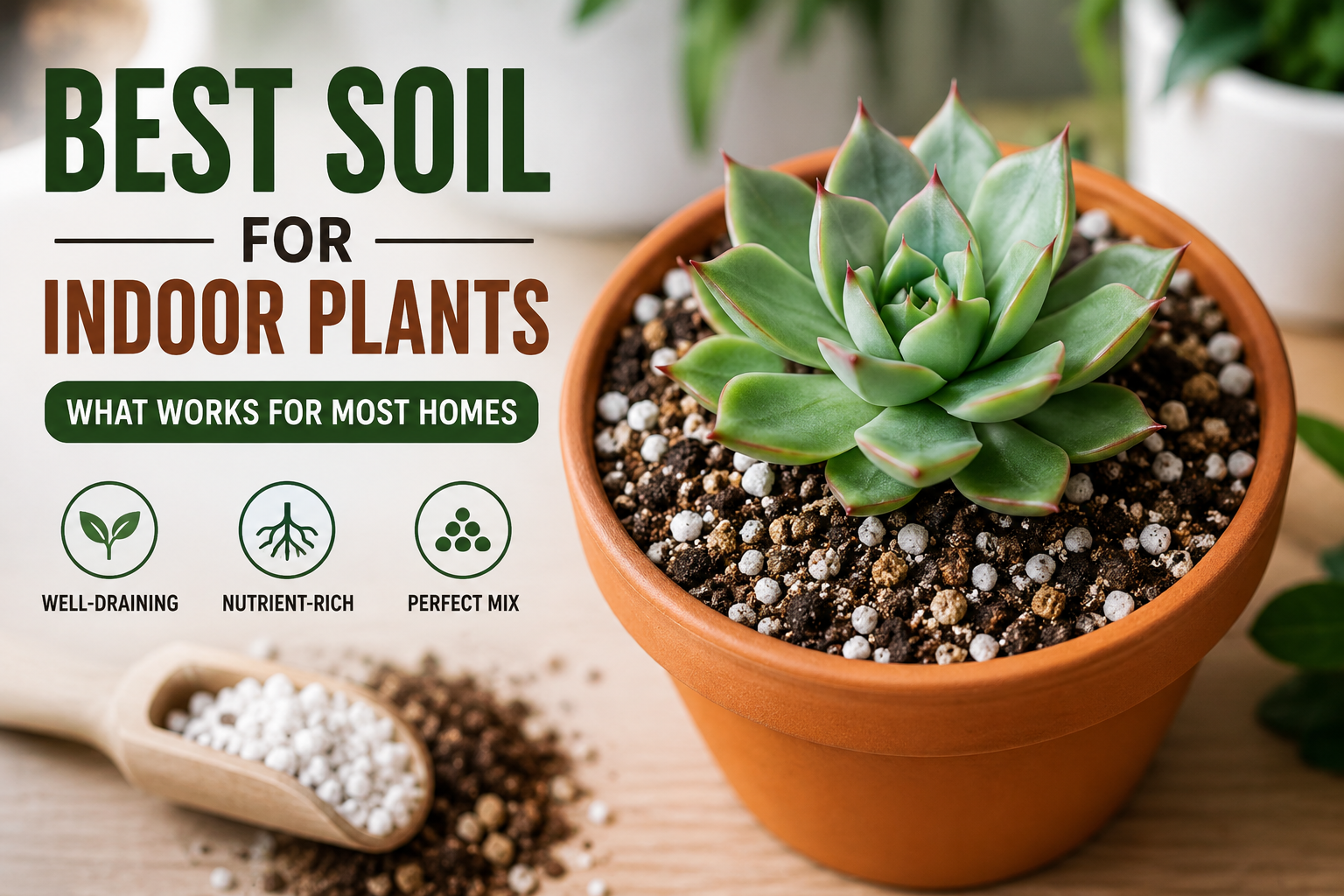
Best Soil for Succulents : A Beginner’s Guide to Choosing the Right Potting Mix (2026)
If you’ve recently bought your first succulent, you might think the hardest part is figuring out how often to water it. That’s what I assumed when I first started learning about indoor plants. Soil isn’t the only factor that affects how quickly a succulent dries out. Learn how much light succulents need indoors to understand how light and watering work together.
Then I discovered something surprising.
Many succulent problems don’t actually start with watering—they start with the soil.
A succulent planted in the wrong soil can struggle even if you’re careful not to overwater it. Leaves may become soft, the roots can start rotting, and the plant may stop growing. On the other hand, a good potting mix makes caring for succulents much easier because it allows water to drain properly and keeps the roots healthy.
The good news is that choosing the right soil isn’t complicated once you understand what your plant needs.
In this guide, I’ll explain what makes succulent soil different from regular potting soil, what ingredients to look for, whether you can make your own mix at home, and the common mistakes many beginners make. By the end, you’ll know exactly how to choose a soil that helps your succulents thrive indoors.
Why the Right Soil Matters
When people think about healthy plants, they often focus on sunlight or watering. Both are important, but the soil quietly does a lot of the hard work.
Think of soil as your plant’s home. It’s where the roots absorb water, nutrients, and oxygen. If that environment isn’t suitable, even the healthiest-looking succulent can begin to struggle over time.
Succulents are different from many common houseplants because they naturally grow in places where rain doesn’t stay around for long. Their roots are designed to take in water quickly and then dry out before the next rainfall.
When they’re planted in heavy, moisture-retaining soil, the roots remain wet for much longer than they should. This creates the perfect conditions for problems like root rot and fungal diseases.
Choosing the right potting mix helps to:
- Allow excess water to drain away quickly.
- Improve airflow around the roots.
- Reduce the risk of root rot.
- Encourage stronger root growth.
- Make watering more forgiving for beginners.
If you’re just starting your indoor plant journey, getting the soil right is one of the easiest ways to improve your chances of success.
Leafy Abode Tip: If your succulent seems unhealthy even though you’re watering carefully, don’t just blame your watering routine. Check the soil too. Many plant problems begin below the surface.
What Makes Succulent Soil Different?
At first glance, all potting mixes can look similar. But once you compare them closely, you’ll notice that succulent soil has a very different texture.
A good succulent mix usually feels:
- Light rather than heavy
- Loose instead of compact
- Gritty rather than soft
- Quick-draining instead of water-retaining
This texture comes from ingredients like perlite, pumice, coarse sand, or small mineral particles that create tiny air pockets throughout the soil.
These air pockets are important because healthy roots need oxygen just as much as they need water.
Regular potting soil is designed for plants that enjoy more consistent moisture, such as peace lilies, pothos, or ferns. Succulents have very different needs, which is why they perform much better in a specially formulated mix.
What Should Good Succulent Soil Do?
Rather than focusing on a specific brand, it’s more helpful to understand what good succulent soil is supposed to do.
1. Drain Water Quickly
This is the most important feature.
After watering, excess water should move through the pot and out of the drainage holes instead of sitting around the roots.
If your soil stays wet for several days, it’s probably holding more moisture than your succulent needs.
2. Allow Air to Reach the Roots
Healthy roots need oxygen.
Loose soil with ingredients like perlite or pumice creates space for air to circulate, helping roots stay healthy and reducing the chance of rot.
3. Support the Plant
The soil should anchor the roots while still remaining loose enough for new roots to grow easily.
If the mix becomes hard and compacted, it can slow root development and make watering less effective.
4. Dry at a Reasonable Speed
Succulents don’t need bone-dry soil all the time, but they also don’t like constantly damp conditions.
A well-balanced succulent mix holds just enough moisture for the roots to absorb what they need before drying out again.
Exactly how quickly this happens depends on factors such as the temperature, humidity, pot size, and the material of the pot.
Can You Use Regular Potting Soil for Succulents?
This is one of the most common questions beginners ask, and the honest answer is:
Yes—but it’s usually not the best choice.
Regular potting soil is made for plants that like to stay evenly moist. It often contains ingredients that hold water for longer periods, which works well for many leafy houseplants.
Succulents, however, prefer the opposite.
If they’re grown in ordinary potting soil without any adjustments, the roots may stay wet for too long, increasing the risk of overwatering problems. Understand Overwatering Succulent problems and 7 signs to identify.
That doesn’t mean you have to throw away your regular potting mix.
If you already have some at home, you can improve its drainage by mixing in materials such as:
- Perlite
- Pumice
- Coarse horticultural sand
This creates a lighter, better-draining mix that’s much more suitable for most indoor succulents.
If you’re buying soil specifically for succulents, though, a dedicated cactus or succulent potting mix is usually the easier option.
A Common Mistake Many Beginners Make
One thing I noticed when I started learning about indoor plants is how easy it is to blame ourselves when a plant isn’t doing well.
If the leaves become soft, we think we watered too much.
If they wrinkle, we assume we didn’t water enough.
But plant care isn’t always that simple.
The soil, the amount of sunlight, the type of pot, and even the humidity inside your home all work together. That’s why two people can water their succulents on the same schedule and get completely different results.
Understanding how these factors work together will help you make better decisions than simply following a fixed watering calendar.
What Makes a Good Succulent Soil Mix?
Now that we’ve covered why soil matters, let’s look at what actually goes into a good succulent potting mix.
When I first started reading about succulent care, I was surprised by the number of different recipes people recommended. Some used only sand, others preferred pumice, and some mixed several ingredients together.
It can feel confusing at first, but there’s good news—you don’t need to find one “perfect” recipe.
Instead, focus on building a mix that drains well and allows air to reach the roots.
Let’s look at the most common ingredients and why they’re used.
Potting Soil – The Foundation
A quality potting soil provides nutrients and gives the roots something to grow in.
However, it shouldn’t make up the entire mix.
Regular potting soil is designed to hold moisture for longer because many indoor plants enjoy consistently moist soil. Succulents don’t.
That’s why most succulent mixes use potting soil as a base and then improve it with fast-draining materials.
If you’re buying potting soil, choose one that’s light and doesn’t feel overly dense or muddy when wet.
Perlite – Helps Water Drain Faster
If you’ve ever noticed small white pieces in a bag of potting mix, you’ve probably seen perlite.
Perlite is a lightweight volcanic material that helps improve drainage and airflow.
Adding perlite to a soil mix can:
- Help excess water drain more quickly.
- Reduce soil compaction over time.
- Improve oxygen around the roots.
- Lower the risk of root rot.
For many beginners, perlite is one of the easiest and most affordable ways to improve regular potting soil.
Pumice – A Great Alternative
Pumice works in a similar way to perlite.
It’s a natural volcanic rock that’s slightly heavier, so it tends to stay mixed into the soil rather than floating to the top after repeated watering.
Many indoor plant enthusiasts prefer pumice because it provides excellent drainage while also helping support larger succulents.
Don’t worry if you can’t find it locally—perlite is still an excellent choice.
Coarse Sand – Not All Sand Is the Same
One mistake many beginners make is assuming any sand will work.
In reality, the type of sand matters.
Coarse horticultural sand helps create spaces between soil particles so water can drain more easily.
Fine beach sand or construction sand does the opposite. It fills those spaces and can actually make the soil denser, reducing drainage.
If you’re adding sand to your mix, choose a coarse grade whenever possible.
Why Many Succulent Mixes Include Small Stones
Some commercial succulent mixes contain small gravel, lava rock, or other mineral particles.
These ingredients help the soil:
- Stay loose for longer.
- Drain more efficiently.
- Resist compaction.
- Improve airflow around the roots.
You don’t need every ingredient in every mix, but having some mineral material is usually beneficial.
A Simple Homemade Succulent Soil Recipe
If you enjoy mixing your own soil, you don’t need a complicated formula.
A basic recipe that works well for many indoor succulents is:
- 2 parts quality potting soil
- 1 part perlite
- 1 part coarse horticultural sand
Mix everything thoroughly before planting.
This creates a soil that’s loose enough to drain well while still providing enough organic matter to support healthy growth.
Keep in mind that no single recipe is perfect for every home.
For example:
- If your home is very humid, you may want to add a little extra perlite.
- If your home is very dry, your soil may dry out faster, so you’ll simply need to monitor your plant more closely.
Learning how your plants respond over time is part of becoming a more confident indoor gardener.
Leafy Abode Tip: Don’t worry about finding the “perfect” soil mix right away. Start with a simple recipe, observe how your plant responds, and make small adjustments if needed. Indoor gardening is a learning process, and every home is a little different.
Is Cactus Soil the Same as Succulent Soil?
This is another question that often comes up.
The answer is:
They’re very similar, but not always exactly the same.
Both cactus soil and succulent soil are designed to drain faster than regular potting soil.
However, some cactus mixes contain more coarse mineral materials because many cacti naturally grow in rocky desert environments.
Most indoor succulents grow perfectly well in a quality cactus and succulent mix.
Rather than focusing on the label, look at what’s inside the bag.
A good mix should contain ingredients that promote drainage and airflow, such as:
- Perlite
- Pumice
- Coarse sand
- Small stones or lava rock
How to Choose a Good Commercial Succulent Soil
If you’d rather buy ready-made soil, there are plenty of good options available.
Instead of choosing based on attractive packaging, check the ingredient list if it’s available.
A good commercial succulent mix should:
✔ Drain quickly.
✔ Feel loose rather than heavy.
✔ Contain drainage materials such as perlite or pumice.
✔ Be suitable for indoor cacti and succulents.
If the soil feels dense, sticky, or holds water for several days after watering, you can often improve it by adding extra perlite.
There’s nothing wrong with adjusting a commercial mix to better suit your home environment.
Does Every Succulent Need the Same Soil?
Not necessarily.
One thing I’ve learned while researching indoor plants is that “succulent” covers many different types of plants.
Although they all prefer good drainage, some tolerate slightly more moisture than others.
For example:
Jade Plant
Jade plants usually do well in a standard succulent mix with good drainage.
Aloe Vera
Aloe prefers soil that dries fairly quickly between waterings.
Echeveria
Echeverias are more sensitive to wet soil and generally appreciate an especially well-draining mix.
Haworthia
Haworthias still need drainage but may not dry out quite as quickly as some desert succulents.
The good news is that a balanced succulent mix works well for most beginners, so you don’t need a different recipe for every plant in your collection.
A Quick Reminder Before You Buy Soil
When shopping for succulent soil, it’s easy to get caught up comparing brands.
Instead, ask yourself these simple questions:
- Does this mix drain well?
- Will it allow air to reach the roots?
- Does it contain ingredients like perlite or pumice?
- Is it designed for cacti or succulents?
If the answer is yes, you’re already on the right track.
Remember, good plant care isn’t about buying the most expensive products. It’s about understanding what your plant needs and choosing materials that support healthy growth.
Common Soil Mistakes That Can Harm Your Succulents
One thing I’ve noticed while learning about indoor plants is that most succulent problems don’t happen overnight.
A plant might look perfectly healthy for weeks before the leaves become soft, growth slows down, or the roots begin to rot.
The good news is that many of these issues can be prevented by avoiding a few common mistakes.
Let’s look at the ones beginners are most likely to make.
Mistake 1: Choosing Soil That Holds Too Much Water
This is probably the biggest reason succulents struggle indoors.
If the soil stays wet for several days after watering, the roots remain damp for longer than they should. Over time, this can lead to root rot.
A simple way to check your soil is to feel it a day or two after watering.
If it still feels very wet and heavy, your mix may not be draining well enough.
That doesn’t always mean you need to replace the entire potting mix. Sometimes adding more perlite or repotting into a better-draining soil is enough to solve the problem.
Mistake 2: Using a Pot Without a Drainage Hole
Beautiful decorative pots are easy to find, but not all of them are suitable for growing succulents.
Without a drainage hole, excess water has nowhere to escape.
Even if you’re careful with watering, moisture can collect at the bottom of the pot, creating conditions that increase the risk of root rot.
If you already own a decorative pot without drainage, you don’t have to throw it away.
A simple solution is to keep your succulent in a smaller nursery pot with drainage holes and place that pot inside the decorative container.
This gives you the best of both worlds—healthy roots and a pot that matches your home décor.
Leafy Abode Tip: When buying a new pot, check for a drainage hole before anything else. It matters more than the colour or design.
Mistake 3: Watering on a Fixed Schedule
Many beginners ask,
“Should I water my succulent every week?”
It’s a reasonable question, but there isn’t one correct answer.
How quickly your soil dries depends on several factors:
- The type of soil
- The size of the pot
- The amount of sunlight
- Indoor temperature
- Humidity
- The season
That’s why experienced indoor plant growers often recommend checking the soil rather than following the calendar.
If the soil is still damp, it’s usually better to wait a little longer before watering again. You can refer to the article How Often Should You Water Succulents?
Mistake 4: Believing Expensive Soil Is Always Better
It’s easy to assume that a more expensive potting mix will automatically produce healthier plants.
In reality, price isn’t the most important factor.
A reasonably priced mix with good drainage can perform just as well as a premium product if it suits your plant and your home environment.
Instead of focusing only on the brand, look at the ingredients and how the soil performs after watering.
Sometimes a simple bag of potting mix improved with perlite works perfectly well.
Mistake 5: Forgetting That Soil Changes Over Time
Potting soil doesn’t stay the same forever.
As months and years pass, organic materials begin to break down.
This can make the soil:
- More compact
- Slower to drain
- Less airy
- Harder for roots to grow through
Most indoor succulents benefit from fresh soil every two to three years, although the exact timing depends on how quickly the plant grows and how the soil is performing.
Repotting also gives you a chance to check the roots and move your plant into a slightly larger container if needed.
How to Tell If Your Soil Is Causing Problems
Sometimes it’s difficult to know whether the issue is watering, sunlight, or something else.
Here are a few signs that your potting mix may need attention.
The Soil Stays Wet for Days
If the soil is still damp several days after watering, it may be holding too much moisture.
The Leaves Become Soft or Mushy
Soft leaves don’t always mean underwatering.
In fact, they can sometimes be a sign that the roots have been sitting in wet soil for too long.
Your Plant Stops Growing
If your succulent receives enough light but hasn’t shown any new growth for a long time, compacted soil could be one of several possible reasons.
You Notice Mold on the Soil Surface
A small amount of mold isn’t always dangerous, but it often indicates that the soil is staying wet for longer than it should.
Improving airflow and drainage usually helps.
Fungus Gnats Keep Appearing
These tiny flying insects are attracted to damp soil.
If you’re seeing large numbers of fungus gnats, it may be worth checking whether your potting mix is drying out properly between waterings.
Does the Pot Material Make a Difference?
Surprisingly, yes.
The material your pot is made from affects how quickly the soil dries.
Terracotta Pots
Terracotta is one of the most popular choices for succulents.
Because it’s porous, it allows some moisture to evaporate through the sides of the pot.
This can help the soil dry a little faster, making it a great option for beginners who are worried about overwatering.
Ceramic Pots
Glazed ceramic pots are attractive and widely available.
They don’t lose moisture as quickly as terracotta, so the soil may stay damp for a little longer.
As long as the pot has a drainage hole and you’re watering carefully, ceramic pots work well for most indoor succulents.
Plastic Pots
Plastic pots are lightweight and inexpensive.
However, they hold moisture for longer because water can’t evaporate through the sides.
If you’re using plastic pots, simply pay closer attention to how quickly your soil dries before watering again.
Simple Tips That Can Make a Big Difference
You don’t need expensive tools or years of experience to grow healthy succulents.
Here are a few habits that can make plant care much easier. You may also refer to one of my blog posts where I explained about How to Care for Succulents Indoors : 10 Simple Tips for Healthy Growth
Check the Soil Before Watering
Instead of watering because it’s “watering day,” feel the soil first.
If it still feels damp below the surface, wait another day or two.
Use the Right Pot Size
A pot that’s much larger than the root ball holds more soil—and more soil holds more moisture.
Choosing a pot that’s only slightly larger than the plant helps the soil dry more evenly.
Give Your Plant Enough Light
Even the best soil can’t make up for poor lighting.
Most succulents grow best in bright light, although the exact amount depends on the variety you’re growing.
Observe Your Plant
One of the best lessons I’ve learned while caring for indoor plants is that they often tell you what they need.
Healthy leaves, steady growth, and firm stems usually mean you’re doing something right.
Changes in colour, texture, or growth are worth investigating early before they become bigger problems.
A Quick Summary Before We Finish
Before planting your succulent, ask yourself these questions:
✅ Does my pot have a drainage hole?
✅ Is my soil loose and well-draining?
✅ Does the mix contain ingredients such as perlite or pumice?
✅ Am I checking the soil before watering?
✅ Am I prepared to refresh the soil every few years?
If you can answer “yes” to these questions, you’re giving your succulent a strong foundation for healthy growth.
Frequently Asked Questions
What is the best soil for indoor succulents?
The best soil for indoor succulents is a well-draining potting mix that allows excess water to flow away quickly while still supporting healthy root growth. Look for a mix that contains ingredients such as perlite, pumice, coarse sand, or small mineral particles. These help improve drainage and air circulation around the roots.
Can I use regular potting soil for succulents?
Yes, but it’s usually not the best option on its own.
Regular potting soil is designed to hold moisture for longer, which works well for many leafy houseplants but can keep succulent roots wet for too long.
If regular potting soil is all you have, you can improve it by mixing in materials like perlite or coarse horticultural sand to increase drainage.
How often should I replace succulent soil?
A good rule of thumb is to replace the soil every 2 to 3 years. If you’re replacing old potting mix, follow our How to Repot Succulents guide for a step-by-step walkthrough.
Over time, potting mixes naturally break down and become more compact, making it harder for water to drain properly. Refreshing the soil also gives you a chance to inspect the roots and repot your succulent if needed.
Is cactus soil the same as succulent soil?
They’re very similar.
Both are designed to drain faster than regular potting soil. Some cactus mixes contain a little more mineral material because many cacti naturally grow in rocky environments, but most commercial cactus and succulent mixes work well for indoor succulents.
Do succulents need fertilizer if they have good soil?
Not very often.
Healthy soil provides a good starting point, and most succulents only need a small amount of fertilizer during their active growing season. Over-fertilizing can sometimes do more harm than good, so it’s usually better to keep things simple.
Should I put rocks at the bottom of my succulent pot?
Many people believe this improves drainage, but it generally isn’t necessary.
A pot with a drainage hole and a well-draining soil mix is usually much more effective than adding a layer of rocks. If drainage is a concern, improving the potting mix is often a better solution.
Key Takeaways
If you’re new to growing succulents, here’s what I’d like you to remember:
- Choose a well-draining succulent or cactus potting mix.
- Improve regular potting soil with perlite or coarse sand if needed.
- Always use a pot with a drainage hole.
- Check whether the soil is dry before watering instead of following a fixed schedule.
- Refresh the potting mix every few years to keep the roots healthy.
You don’t need expensive products or years of gardening experience to grow healthy succulents. Starting with the right soil and paying attention to your plant over time will teach you far more than trying to follow a perfect schedule.
Final Thoughts
Learning to care for indoor plants can feel overwhelming at first. One article tells you to water once a week, another says once a month, and before long it feels like everyone has a different opinion.
The truth is, there isn’t a single formula that works for every home.
The right soil simply gives your succulent the best possible start. Once you combine a well-draining potting mix with the right amount of light and thoughtful watering, caring for your plant becomes much easier.
Don’t worry about getting everything perfect from day one. Every plant owner learns through observation and small adjustments.
The more time you spend with your plants, the more confident you’ll become.
If this is your first succulent, think of it as the beginning of your indoor gardening journey rather than a test you have to pass.
A Quick Note from Leafy Abode
At Leafy Abode, we know what it’s like to be new to indoor plants. Our goal isn’t to overwhelm you with complicated gardening terms or make plant care feel intimidating.
Instead, we focus on simple, well-researched guidance that’s easy to understand and practical to use at home. Whether you’re growing your very first succulent or adding another plant to your collection, we’re here to help you learn one step at a time.

I am the creator of LeafyAbode, a platform dedicated to helping people grow and care for indoor plants with confidence. I share practical, easy-to-follow guides on plant care, home gardening, and creating a green living space. My content is based on research, real experience, and a passion for making plant care simple for beginners and enthusiasts alike.
Post Disclaimer
The information contained in this post is for general information purposes only. The information is provided by Best Soil for Succulents : The Complete Guide to Choosing the Right Potting Mix (2026) and while we endeavour to keep the information up to date and correct, we make no representations or warranties of any kind, express or implied, about the completeness, accuracy, reliability, suitability or availability with respect to the website or the information, products, services, or related graphics contained on the post for any purpose.
3 thoughts on “Best Soil for Succulents : The Complete Guide to Choosing the Right Potting Mix (2026)”