
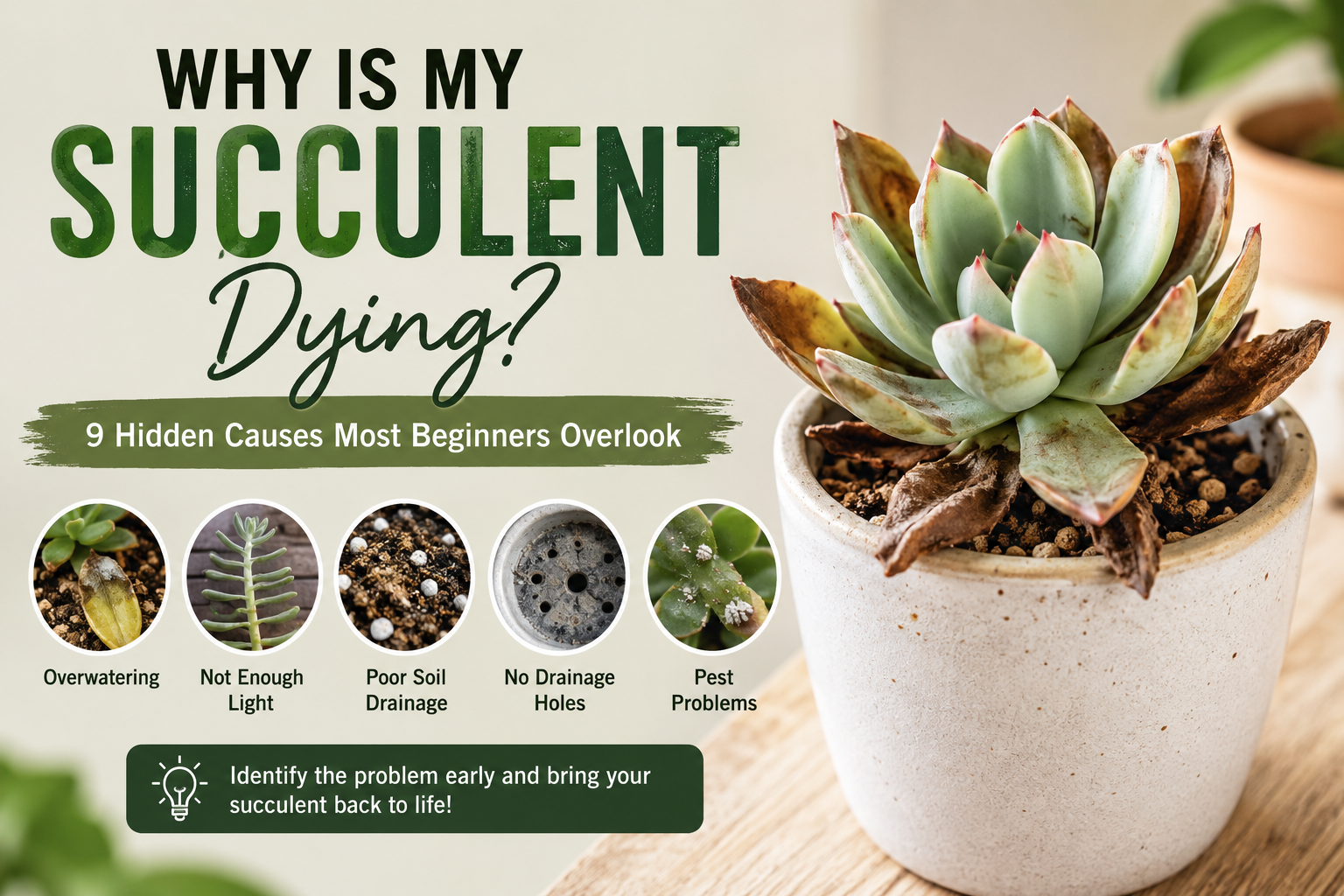
Why Is My Succulent Dying? 9 Hidden Causes Most Beginners Overlook (2026)
You bought a succulent because everyone said they were hard to kill.
A few weeks or months later, the leaves started dropping. The color changed. Growth slowed down. Maybe the stem became soft, or the plant suddenly looked unhealthy for no obvious reason.
If that sounds familiar, you’re not alone.
One of the most confusing things about succulents is that they often hide problems until they become serious. A plant can appear healthy on the surface while stress is building below the soil.
The good news is that most succulent problems can be traced back to a few common causes. Once you identify what’s happening, recovery is often possible.
Why Succulents Struggle Indoors
Succulents evolved to survive in environments very different from most homes.
Indoors, they face challenges such as:
- Lower light levels
- Reduced airflow
- Slower soil drying
- Inconsistent watering habits
- Containers with poor drainage
A succulent that thrives outdoors may struggle on a shelf several feet away from a window.
Understanding these differences is often the first step toward solving the problem.
1. Overwatering
If there’s one issue responsible for most dying succulents, it’s overwatering.
Many beginners water succulents on a fixed schedule instead of checking whether the soil actually needs moisture. Understanding how often to water indoor plants can help prevent this mistake and reduce the risk of root rot.
Signs of overwatering include:
- Soft leaves
- Yellowing foliage
- Mushy stems
- Leaf drop
- Black spots
Succulents store water inside their leaves, so they usually prefer periods of dryness between watering sessions.
If your plant shows these symptoms, these warning signs of an overwatered succulent can help you identify the problem before root damage becomes severe.
2. Not Enough Light
A succulent can survive in lower light for a while, but eventually it begins showing signs of stress.
Common symptoms include:
- Long stretched stems
- Pale leaves
- Leaning growth
- Wider gaps between leaves
This process, known as etiolation, is extremely common in apartments and rooms that don’t receive much natural sunlight.
Moving a succulent closer to a bright window often improves growth over time.
3. Poor Soil Drainage
Healthy succulent roots need both moisture and oxygen.
When soil stays wet for too long, roots struggle to function properly.
Many indoor plant mixes hold more moisture than succulents prefer.
A better succulent mix should feel:
- Loose
- Gritty
- Fast draining
- Airy
If the soil remains damp several days after watering, drainage may be contributing to the problem. Many indoor plant problems begin below the surface. Choosing the best soil for indoor plants can dramatically improve drainage and root health.
4. Pots Without Drainage Holes
Decorative containers are popular, but they can create serious issues if excess water cannot escape.
Without drainage holes:
- Water accumulates at the bottom
- Roots remain wet longer
- Rot becomes more likely
Choosing the right pot is often just as important as choosing the right soil. Here’s why drainage holes matter for indoor plants more than most beginners realize.
5. Sudden Temperature Changes
Succulents generally prefer stable conditions.
Plants placed near:
- Air conditioning vents
- Heaters
- Drafty windows
- Frequently opened doors
may experience stress that affects growth and overall health.
Temperature fluctuations are often overlooked because the symptoms can resemble other plant problems.
6. Root Rot
Root rot often develops quietly below the soil before visible symptoms appear.
Warning signs may include:
- Yellow leaves
- Weak growth
- Soft stems
- Persistent wet soil
- Unpleasant odors from the pot
Healthy roots should feel firm and light-colored.
Dark, mushy roots usually indicate rot.
The sooner root rot is addressed, the better the chances of recovery.
7. Your Succulent Has Become Rootbound
Sometimes the problem isn’t water or light.
The plant may simply need more space.
A rootbound succulent may show:
- Slower growth
- Roots emerging from drainage holes
- Water running through the pot quickly
- Reduced vigor
Repotting into a slightly larger container often helps restore healthy growth. Old compacted soil can sometimes contribute to poor plant health. Learn How to Repot Succulents properly to give your plant a fresh start.
8. Pest Infestations
While succulents are relatively resilient, pests can still become a problem.
Watch for:
- White cotton-like clusters
- Sticky residue
- Tiny insects
- Distorted leaves
Common succulent pests include mealybugs, spider mites, and scale insects.
Regular inspections help catch problems before they spread.
9. Expecting Fast Growth
Many healthy succulents grow slowly.
This is especially true indoors where conditions are less intense than their natural environment.
A healthy succulent often shows:
- Firm leaves
- Compact growth
- Consistent color
- Gradual development
Slow growth alone doesn’t necessarily mean something is wrong.
How to Tell if Your Succulent Can Be Saved
Most succulents are surprisingly resilient.
Ask yourself:
- Are the roots still healthy?
- Is the stem firm?
- Can watering habits be improved?
- Is lighting sufficient?
If the answer is yes to most of these questions, recovery is often possible.
If your plant looks severely stressed, this guide on how to save a dying indoor plant walks through the recovery process step by step.
When a Succulent May Not Recover
Severe stem rot or complete root failure can sometimes be irreversible.
However, all may not be lost.
Many succulent varieties can be propagated from healthy leaves or stem cuttings, allowing you to start again using unaffected plant material.
Final Thoughts
If your succulent is dying, the problem is usually not a lack of effort.
In fact, many succulents decline because they’re receiving too much attention rather than too little.
The most common causes include:
- Overwatering. You must know proper succulent watering routine to save your indoor plants from dying.
- Insufficient light
- Poor drainage
- Heavy soil
- Environmental stress
The earlier these issues are identified, the easier they are to fix. Most of these problems can be prevented by following a consistent indoor succulent care routine from the beginning.
Nearly every succulent owner loses a plant at some point. What usually makes the difference is recognizing warning signs early and adjusting care before permanent damage occurs.
Frequently Asked Questions
Why are my succulent leaves falling off?
Leaf drop is often linked to overwatering, root stress, poor drainage, or sudden environmental changes.
Can a dying succulent come back to life?
Yes. Many succulents recover once watering, lighting, and soil conditions are corrected.
Why is my succulent turning brown?
Brown areas may result from sunburn, underwatering, overwatering, or stem rot depending on the location and appearance of the damage.
Should I remove dead succulent leaves?
Yes. Removing dead leaves improves airflow and reduces the likelihood of pests and fungal issues.

I am the creator of LeafyAbode, a platform dedicated to helping people grow and care for indoor plants with confidence. I share practical, easy-to-follow guides on plant care, home gardening, and creating a green living space. My content is based on research, real experience, and a passion for making plant care simple for beginners and enthusiasts alike.
Post Disclaimer
The information contained in this post is for general information purposes only. The information is provided by Why Is My Succulent Dying? 9 Hidden Causes Most Beginners Overlook (2026) and while we endeavour to keep the information up to date and correct, we make no representations or warranties of any kind, express or implied, about the completeness, accuracy, reliability, suitability or availability with respect to the website or the information, products, services, or related graphics contained on the post for any purpose.
4 thoughts on “Why Is My Succulent Dying? 9 Hidden Causes Most Beginners Overlook (2026)”