
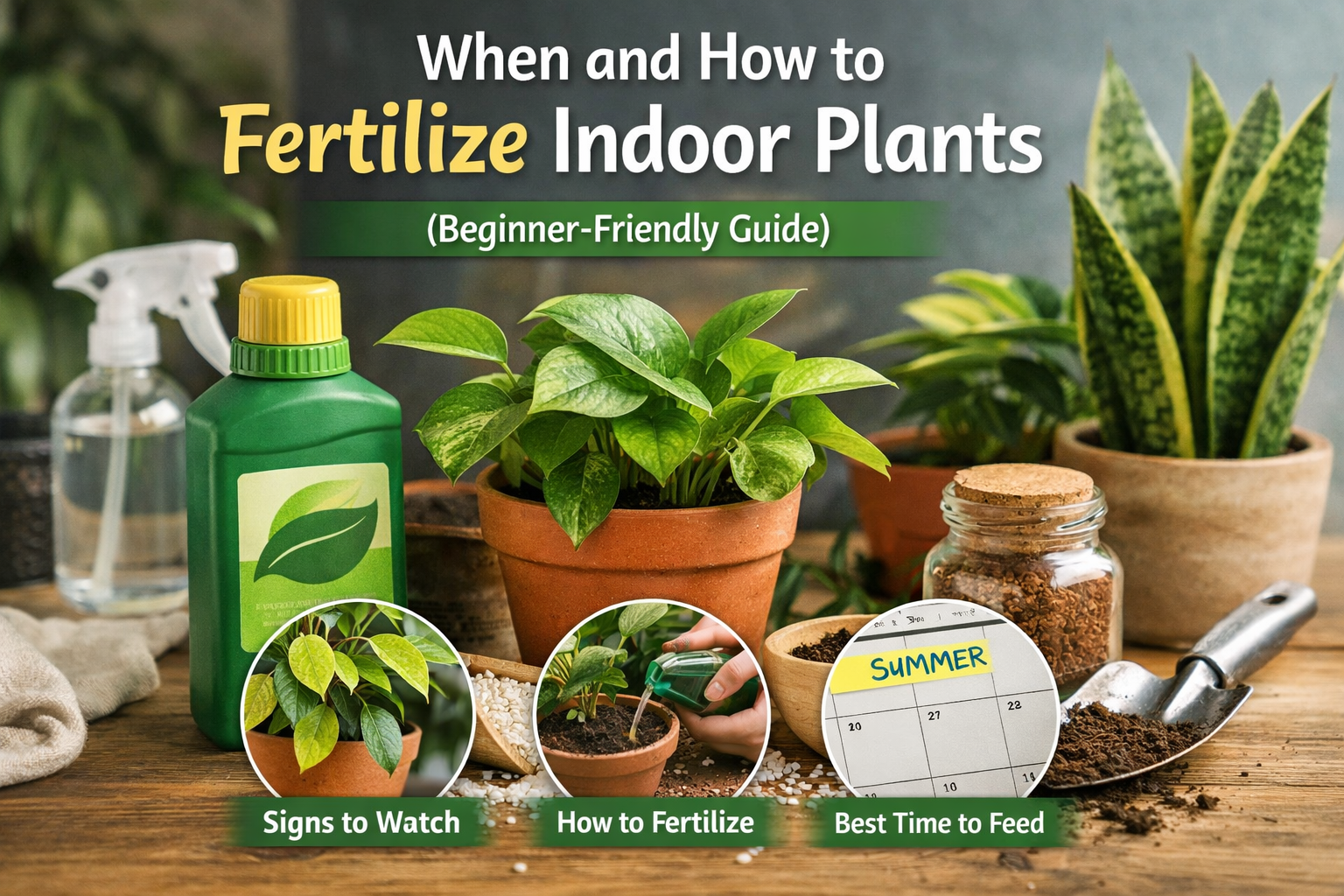
Indoor plants rely on light, water, and soil to grow — but over time, soil nutrients naturally become depleted. That’s where fertilizer plays a role. When used correctly, fertilizer supports healthy growth, vibrant leaves, and stronger roots.
However, fertilizing too much — or at the wrong time — can cause more harm than good. This beginner-friendly guide explains when to fertilize indoor plants, how to do it safely, and how to avoid common mistakes.
If you’re still building the basics, this indoor plant care guide explains how watering, light, and soil all work together.
Do Indoor Plants Really Need Fertilizer?
Yes — but not constantly.
Unlike outdoor plants, indoor plants grow in containers. Over time, nutrients in potting soil are used up. Once depleted, growth may slow and leaves may look pale.
That said, fresh soil already contains nutrients. If you recently repotted your plant, fertilizing may not be necessary yet. If you’re unsure about soil quality, this guide on best soil for indoor plants explains what works best.
Signs Your Plant May Need Fertilizer
Plants show subtle signs when nutrients are low.
Common indicators include:
-
Slower than usual growth
-
Pale or faded leaves
-
Smaller new leaves
-
Reduced flowering
Yellowing can sometimes be nutrient-related. However, watering issues can cause similar symptoms. This article explains why plant leaves turn yellow and how to tell the difference.
Best Time to Fertilize Indoor Plants
Indoor plants grow most actively during spring and summer. That’s the ideal time to fertilize.
Avoid fertilizing during:
-
Winter (growth slows down): Because many plants slow their growth during colder months, proper indoor plant care in winter usually involves reducing fertilizer use.
-
Immediately after repotting
-
When a plant is stressed
If you’ve recently repotted, wait a few weeks. Here’s a simple guide on how to repot indoor plants safely before introducing fertilizer.
Types of Fertilizer for Indoor Plants
Choosing the right fertilizer makes a big difference. Excess fertilizer salts may cause leaf edge burn, which is explained further in this guide on brown tips on indoor plant leaves.
1. Liquid Fertilizer
Easy to mix with water and apply. Good for beginners.
2. Slow-Release Fertilizer
Gradually releases nutrients over time. Requires less frequent application.
3. Organic Fertilizer
Gentle and natural. Suitable for homes with pets or sensitive environments.
How Often Should You Fertilize?
A general beginner rule:
-
Every 4–6 weeks during active growth
-
Reduce or stop in winter
Always follow label instructions and use diluted solutions if unsure.
If watering frequency has been confusing, review how often to water indoor plants before combining fertilizer with your routine.
How to Fertilize Indoor Plants Step-by-Step
-
Water the plant lightly first (moist soil absorbs nutrients better).
-
Dilute fertilizer according to instructions.
-
Apply evenly around the soil surface.
-
Avoid getting fertilizer directly on leaves.
After fertilizing, monitor your plant for a few days.
Common Fertilizing Mistakes to Avoid
-
Over-fertilizing (more is not better)
-
Fertilizing dry soil
-
Fertilizing during winter dormancy
-
Ignoring drainage
Drainage is important because excess fertilizer salts can accumulate in soggy soil. If you’ve struggled with watering balance before, understanding overwatering vs underwatering indoor plants helps prevent nutrient buildup issues.
Can You Fertilize Low Light Plants?
Yes — but in smaller amounts.
Low light plants grow more slowly, so they require fewer nutrients. If your home receives limited sunlight, these low light indoor plants for apartments are generally less demanding.
Final Thoughts
Fertilizing indoor plants is simple when done at the right time and in the right amount. During active growing seasons, a small boost of nutrients supports healthy development. However, consistency and moderation are key.
With balanced watering, good soil, proper light, and occasional feeding, indoor plants can thrive for years.
3 thoughts on “When and How to Fertilize Indoor Plants (Beginner-Friendly Guide)”