
Indoor plants naturally collect dust on their leaves over time. This dust may seem harmless, but it can block sunlight and reduce the plant’s ability to photosynthesize efficiently.
Cleaning plant leaves helps them absorb more light, stay healthier, and look more vibrant. The good news is that cleaning indoor plants is simple and only takes a few minutes.
If you’re new to plant care, this indoor plant care guide explains the basic habits that help houseplants stay healthy year-round.
Why Cleaning Indoor Plant Leaves Is Important
Plants use their leaves to absorb light and produce energy. When dust builds up on the surface, it reduces the amount of light reaching the leaf.
Regular cleaning helps:
-
Improve photosynthesis
-
Keep plants looking fresh
-
Prevent pests from hiding on dusty surfaces
-
Reduce fungal problems caused by trapped moisture
Even plants that appear clean can benefit from occasional wiping.
How Often Should You Clean Plant Leaves?
Most indoor plants benefit from leaf cleaning every two to four weeks.
However, frequency depends on your environment. Homes with open windows, fans, or nearby roads may accumulate dust more quickly.
It’s also helpful to clean leaves when inspecting plants for problems such as brown tips on indoor plant leaves, which can appear due to environmental stress.
Best Methods to Clean Indoor Plant Leaves
Different plants may require slightly different cleaning techniques.
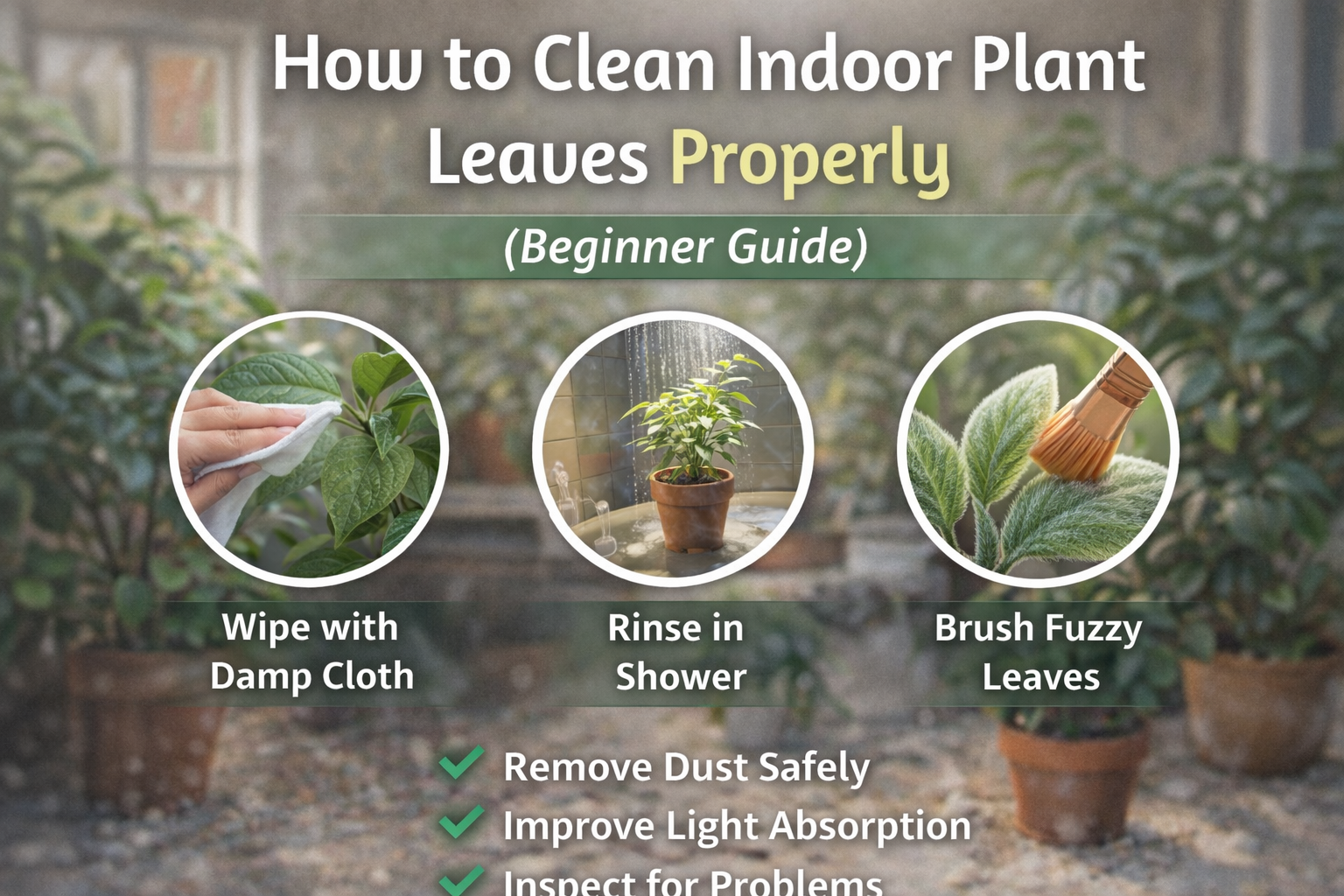
1. Wipe Leaves With a Damp Cloth
This is the safest and most common method.
Steps:
-
Use a soft microfiber cloth
-
Lightly dampen it with lukewarm water
-
Support the leaf with one hand
-
Gently wipe the surface
Avoid pressing too hard, especially on delicate plants.
2. Rinse Plants in the Shower
Small and medium houseplants can be rinsed in the sink or shower.
Use gentle lukewarm water to wash away dust. Allow the plant to drain completely afterward.
Good drainage is important for healthy roots. If water becomes trapped in the pot, it may cause problems, which is why indoor plants need drainage holes.
3. Use a Soft Brush for Fuzzy Leaves
Plants with fuzzy or textured leaves should not be wiped with cloths.
Instead, use:
-
A soft paintbrush
-
A small makeup brush
Brush gently to remove dust without damaging the leaf surface.
Avoid Using Leaf Shine Products
Many commercial leaf shine sprays contain oils that can clog plant pores.
Plants naturally regulate moisture through tiny openings on their leaves. Blocking these pores may interfere with normal plant functions.
Clean water is usually the safest option.
Check Plant Health While Cleaning
Cleaning leaves is also a good opportunity to inspect plants for early signs of stress.
Look for:
-
Yellow leaves
-
Brown leaf tips
-
Small insects
-
Sticky residue on leaves
If you notice unusual discoloration, this guide explains why plant leaves turn yellow and what adjustments may be needed.
Maintain Healthy Growing Conditions
Clean leaves work best when combined with proper plant care.
Balanced watering, good lighting, and adequate humidity all contribute to healthy foliage.
For example, dry indoor air may cause leaf edges to dry out. Learning how to increase humidity for indoor plants can help prevent this issue.
During warmer months, plants may also need slightly different care routines. This guide on indoor plant care in summer explains how heat and sunlight affect plant growth.
Final Thoughts
Cleaning indoor plant leaves is a simple but effective habit that supports plant health. By removing dust regularly, plants can absorb more light and maintain stronger growth.
Combined with proper watering, humidity, and seasonal care, regular leaf cleaning helps indoor plants stay vibrant and healthy.
A few minutes of maintenance every few weeks can make a noticeable difference in the long-term health of your plants.