
Introduction
Indoor plants can completely change how a home feels they add life, color, and calm. Yet for many people, keeping houseplants alive feels frustrating. Leaves turn yellow, growth slows down, or the plant suddenly droops for no clear reason.
The truth is simple: most indoor plant problems come from small care mistakes, not a lack of effort.
This guide is designed for beginners, apartment dwellers, and busy plant owners. You’ll learn how to care for indoor plants using simple, proven methods that actually work in real homes not just in theory. Choosing the right plant for your space matters — this guide on best indoor plants for small apartments helps beginners get started.
Indoor Plant Care Basics (What Every Plant Needs)
All indoor plants depend on four essential factors:
- Light – energy for growth
- Water – hydration without suffocation
- Soil – support and nutrients
- Air & humidity – healthy leaves and roots
When even one of these is off balance, problems appear. Good plant care is about balance, not perfection. For homes with pets, selecting pet-safe indoor plants for homes helps create a safe environment.
Light Requirements for Indoor Plants (Simplified)
Many homes receive indirect or limited sunlight, but that doesn’t mean plants won’t grow. These low light indoor plants for apartments thrive in shaded indoor spaces.
Light is the most misunderstood part of indoor plant care.
Types of indoor light
- Bright indirect light – near a window, but no harsh sun
- Low light – rooms with limited natural light
- Direct sunlight – strong sun hitting the leaves
Quick test:
If you can comfortably read during the day without turning on a light, most houseplants will survive there.
How Often Should You Water Indoor Plants?
There is no fixed watering schedule that works for every plant. Many common plant issues come from watering mistakes. This comparison explains overwatering vs underwatering indoor plants and how to tell the difference.
A better rule:
- Check the soil, not the calendar
- Water only when the top 2–3 cm of soil feels dry
- Always use pots with drainage holes
Common watering mistakes
- Watering a little every day
- Letting water sit in the saucer
- Using cold water directly from the tap
Watering is one of the most common challenges for plant owners, which is why knowing How Often to Water Indoor Plants helps prevent many problems.
Best Soil for Indoor Plants
Healthy soil should:
- Drain excess water
- Hold moisture without becoming soggy
- Allow oxygen to reach roots
Simple DIY potting mix
- 40% all-purpose potting soil
- 30% coco peat or peat moss
- 20% compost
- 10% perlite or coarse sand
This mix works well for most common houseplants. You should also know How to Repot Indoor Plants
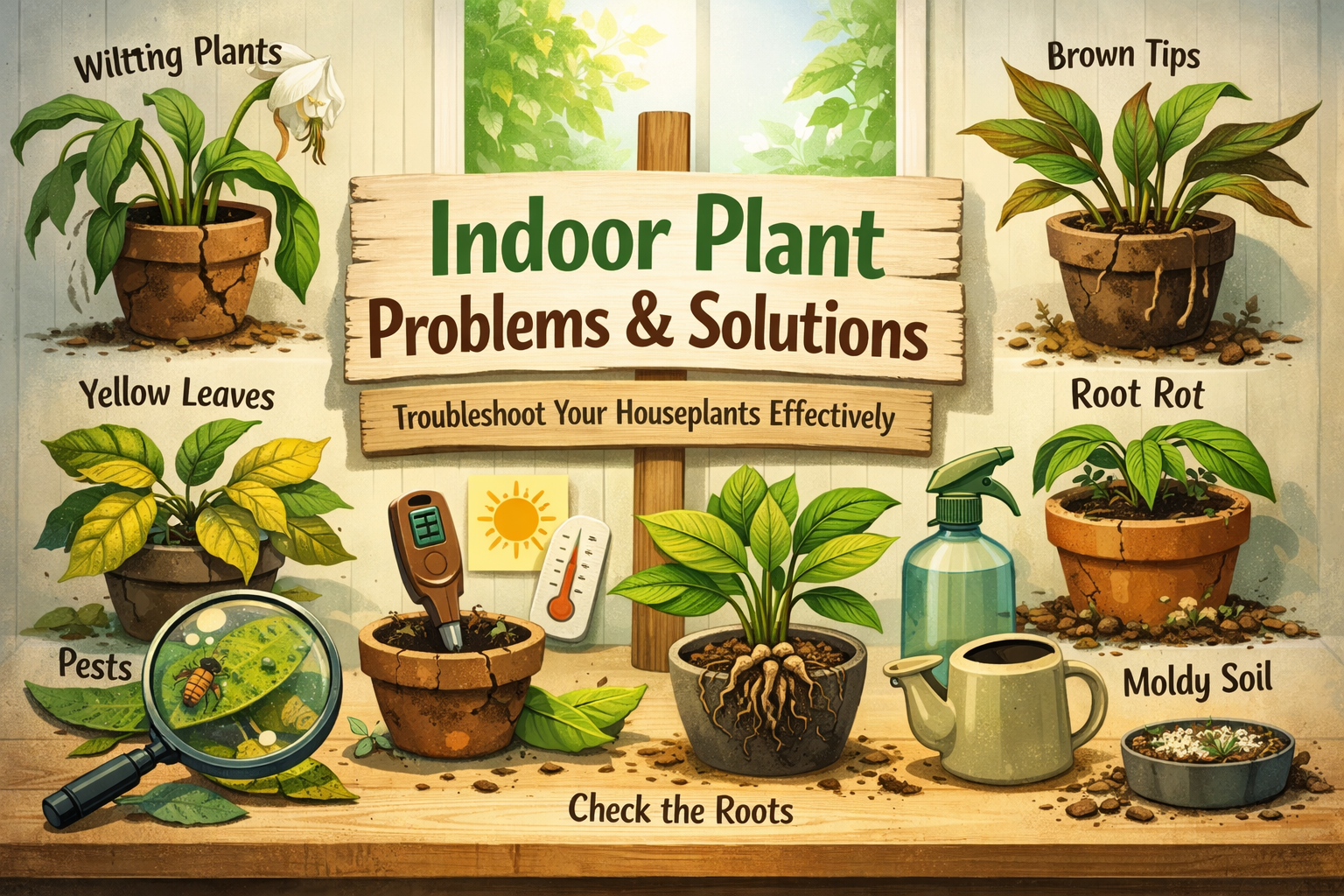
Common Indoor Plant Problems (And Easy Fixes)
| Problem | Likely Cause | Simple Fix |
|---|---|---|
| Yellow leaves | Overwatering | Let soil dry more |
| Brown leaf tips | Low humidity | Mist or humidifier |
| Drooping plant | Thirst or root stress | Deep watering |
| Slow growth | Low light | Move closer to window |
| Pests | Poor airflow | Neem oil treatment |
Yellow leaves are one of the most common warning signs in houseplants. Learn the causes and fixes in our detailed guide on why plant leaves turn yellow.
When and How to Repot Indoor Plants
Your plant may need repotting if:
- Roots grow out of drainage holes
- Water runs straight through the pot
- Growth has stopped
Repotting tips
- Choose a pot 1–2 inches larger
- Repot during spring or early summer
- Water lightly after repotting
Fertilizing Indoor Plants the Right Way
Indoor plants need nutrients, but less is more. While good soil supports healthy roots, nutrients naturally decrease over time. Knowing when and how to fertilize indoor plants helps maintain steady growth without overfeeding
Best practice
- Feed every 4–6 weeks during growth season
- Use liquid fertilizer diluted to half strength
- Stop fertilizing in winter
Over-fertilizing causes more damage than under-feeding.
Easy Indoor Plants for Beginners
We’ve also published a detailed guide on easy indoor plants for beginners, which pairs perfectly with this article. If you’re just starting out, choose plants that forgive mistakes:
- Snake Plant
- Pothos
- ZZ Plant
- Peace Lily
- Spider Plant
These plants tolerate low light and irregular watering.
Seasonal Indoor Plant Care Tips
Indoor plant needs change with seasons.
Winter
Seasonal changes also affect plant health, so understanding indoor plant care in winter helps you adjust watering, light, and humidity correctly.
- Reduce watering
- Increase light exposure
- Avoid cold drafts
Indoor air can often become dry, especially during winter months. Learning how to increase humidity for indoor plants helps prevent brown tips and leaf stress in tropical varieties.
Summer
Seasonal adjustments are important for plant health. This guide on indoor plant care in summer explains how warmer temperatures affect watering, light, and growth.
- Water more frequently
- Improve airflow
- Increase humidity
Monsoon / Humid seasons
- Watch for fungus and pests
- Ensure proper drainage
Final Tips for Healthy Indoor Plants
- Observe plants weekly
- Rotate pots for even growth
- Clean dust from leaves
- Avoid sudden environment changes
Healthy plants grow from consistent care, not constant attention.
Frequently Asked Questions (Featured Snippet Optimized)
How often should indoor plants be watered?
Most indoor plants should be watered when the top layer of soil feels dry. This usually means once every 7–10 days, depending on light and season.
Do indoor plants need sunlight?
Yes, but most prefer bright indirect light rather than direct sunlight.
Why are my indoor plant leaves turning yellow?
The most common cause is overwatering, followed by poor drainage or low light. Brown, crispy leaf edges are a common indoor issue. This detailed guide on brown tips on indoor plant leaves explains the most likely causes and how to fix them.

I am the creator of LeafyAbode, a platform dedicated to helping people grow and care for indoor plants with confidence. I share practical, easy-to-follow guides on plant care, home gardening, and creating a green living space. My content is based on research, real experience, and a passion for making plant care simple for beginners and enthusiasts alike.
Post Disclaimer
The information contained in this post is for general information purposes only. The information is provided by Indoor Plant Care: A Practical Beginner’s Guide to Healthy Houseplants (2026) and while we endeavour to keep the information up to date and correct, we make no representations or warranties of any kind, express or implied, about the completeness, accuracy, reliability, suitability or availability with respect to the website or the information, products, services, or related graphics contained on the post for any purpose.
15 thoughts on “Indoor Plant Care: A Practical Beginner’s Guide to Healthy Houseplants (2026)”