
Watering indoor plants sounds simple, yet it’s the most common reason houseplants struggle or die. Many beginners believe plants need water on a fixed schedule, but indoor plants don’t work that way. In reality, watering too often causes more damage than watering too little.
If you’ve ever wondered how often to water indoor plants, this guide will clear the confusion. Instead of complicated charts or strict routines, you’ll learn one simple rule that works for most indoor plants, along with practical tips to adjust it for your home.
One of the most common beginner mistakes is watering too often. If you’re unsure, this guide on how often to water indoor plants explains a simple rule that works.
One of the most common beginner mistakes is watering too often. If you’re unsure, this guide on how often to water indoor plants explains a simple rule that works.
Also, you should read this article about Why Some Plants Are Better for Beginners it is very important to know about the plants before you get them home.
The Simple Rule for Watering Indoor Plants
Here is the rule that works in most homes:
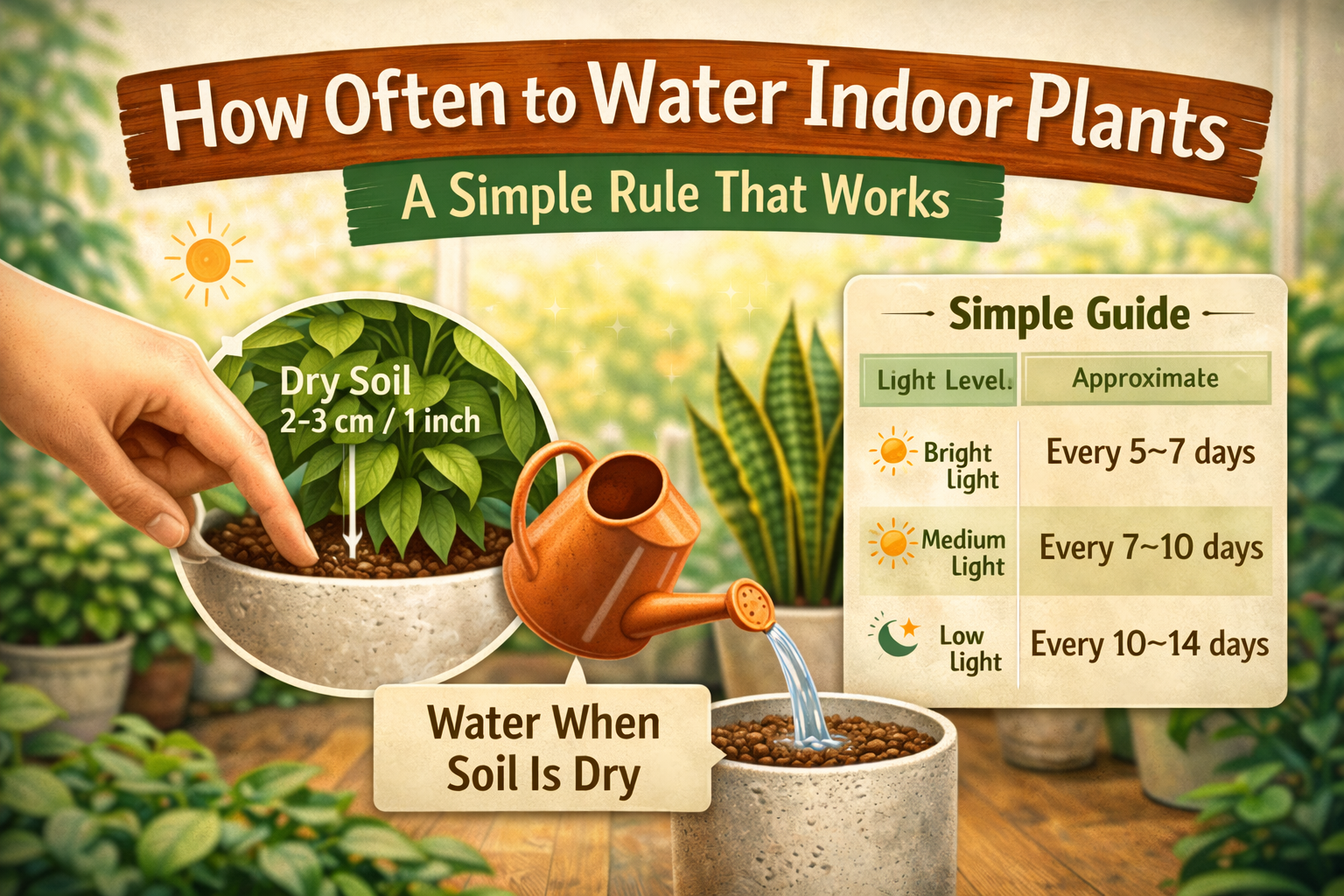
Water your indoor plants only when the top 2–3 cm of soil feels dry to the touch.
This rule focuses on the plant’s actual needs instead of the calendar. When soil dries slightly, plant roots receive oxygen, which keeps them healthy. Constantly wet soil blocks airflow and leads to root problems.
Once you understand this principle, watering becomes easier and more consistent.
Why a Fixed Watering Schedule Often Fails
Many people water their plants every few days because it feels responsible. However, indoor environments vary widely. Light, temperature, pot size, and humidity all affect how fast soil dries.
For example, a plant near a bright window dries faster than one in a shaded corner. A small pot dries quicker than a large one. Because of these differences, fixed schedules often lead to overwatering.
Instead of asking “Is it watering day?”, it’s better to ask “Does my plant actually need water?”
How to Check Soil Moisture Correctly
Checking soil moisture takes only a few seconds and prevents most watering mistakes.
Use the finger test
Insert your finger into the soil up to the first knuckle.
- If the soil feels dry, it’s time to water.
- If it still feels moist, wait a few more days.
This method works well for most indoor plants and helps beginners build confidence.
Use a wooden stick (optional)
A clean wooden stick or skewer can be pushed into the soil. If it comes out damp, watering can wait. If it’s dry, the plant likely needs water.
Moisture meters can be useful, but they aren’t always accurate. Simple methods usually work better.
Average Watering Frequency (General Guide)
While the soil test is the best method, the table below gives a rough idea of watering frequency under normal indoor conditions.
| Light Level | Approximate Watering Frequency |
|---|---|
| Bright indirect light | Every 5–7 days |
| Medium light | Every 7–10 days |
| Low light | Every 10–14 days |
These ranges should be adjusted based on season, plant type, and pot size.
How Light Affects Watering Needs
Light plays a major role in how often indoor plants need water.
Plants in bright light use water faster because photosynthesis increases. As a result, soil dries more quickly. On the other hand, plants in low light grow slowly and use less water, so their soil stays moist longer.
When light decreases, watering frequency should also decrease. This adjustment prevents root stress and fungal issues.
How Seasons Change Watering Frequency
Winter
During winter, most indoor plants grow slowly. Lower light levels and cooler temperatures reduce water use. Watering should be reduced, sometimes by half.
Summer
In warmer months, plants grow actively. Soil dries faster, so watering may be needed more often. However, watering should still depend on soil dryness, not heat alone.
Rainy or humid seasons
High humidity slows evaporation. Even in warm weather, soil may stay wet longer. Always check soil moisture before watering.
Signs You Are Overwatering Indoor Plants
Overwatering is more harmful than underwatering. Common signs include:
- Yellowing leaves
- Soft or mushy stems
- Wilting even though soil is wet
- Mold or fungus on the soil surface
- A sour smell from the pot
If these signs appear, watering frequency should be reduced immediately.
Signs You Are Underwatering Indoor Plants
Underwatering is easier to fix, but it still causes stress. Look for these signs:
- Drooping or curling leaves
- Dry, crumbly soil
- Slow growth
- Leaf edges turning brown
When underwatering occurs, water thoroughly and allow excess water to drain out.
How to Water Indoor Plants Properly
Watering technique matters just as much as frequency.
Water deeply
Water should be added until it flows out of the drainage holes. This ensures roots receive moisture evenly.
Empty excess water
Standing water in saucers should be emptied after a few minutes. Roots sitting in water can rot quickly.
Use room-temperature water
Cold water can shock roots. Room-temperature water is gentler and safer.
Pot Size and Drainage Make a Big Difference
Pots without drainage holes trap excess water, increasing the risk of root rot. Always choose pots with drainage holes whenever possible.
Large pots hold more soil and stay wet longer, while small pots dry quickly. Watering habits should be adjusted accordingly.
Good drainage supports healthy roots and makes watering more forgiving.
Common Watering Mistakes to Avoid
Several common mistakes lead to plant problems:
- Watering on a fixed schedule
- Using decorative pots without drainage
- Watering lightly but frequently
- Ignoring seasonal changes. During colder months, watering habits should change slightly, which is explained in this guide on indoor plant care in winter.
- Assuming all plants need the same care
Avoiding these habits improves plant health significantly.
Do Different Plants Need Different Watering Schedules?
Yes, plant type matters.
- Succulents and cacti prefer dry soil between watering
- Tropical plants enjoy slightly moist soil but hate soggy roots
- Flowering plants often need more water during bloom periods
However, even with different plants, the soil dryness rule still applies. Checking the soil remains the safest approach.
When It’s Better to Wait Before Watering
If you’re unsure whether to water, waiting a day or two is usually safer. Most indoor plants recover better from mild dryness than from excess moisture.
Patience often saves plants from unnecessary stress.
Frequently Asked Questions
Is it better to overwater or underwater indoor plants?
Underwatering is generally safer. Overwatering damages roots and can cause irreversible problems.
Can I water indoor plants every day?
Daily watering is rarely needed and usually harmful. Most indoor plants need water only after soil dries slightly.
Should I mist plants instead of watering?
Misting increases humidity but does not replace watering. Roots still need water from the soil.
Final Thoughts: Keep Watering Simple
Learning how often to water indoor plants doesn’t require complicated rules. By checking soil moisture and adjusting for light and season, plant care becomes easier and more enjoyable.
When plants receive water only when they need it, roots stay healthy, growth improves, and common problems become rare. With practice, this simple rule becomes second nature.
Healthy plants don’t come from perfect schedules — they come from observation and patience.

I am the creator of LeafyAbode, a platform dedicated to helping people grow and care for indoor plants with confidence. I share practical, easy-to-follow guides on plant care, home gardening, and creating a green living space. My content is based on research, real experience, and a passion for making plant care simple for beginners and enthusiasts alike.
Post Disclaimer
The information contained in this post is for general information purposes only. The information is provided by How Often to Water Indoor Plants (A Simple Rule That Works) and while we endeavour to keep the information up to date and correct, we make no representations or warranties of any kind, express or implied, about the completeness, accuracy, reliability, suitability or availability with respect to the website or the information, products, services, or related graphics contained on the post for any purpose.
9 thoughts on “How Often to Water Indoor Plants (A Simple Rule That Works)”