
Indoor plants depend on healthy soil more than most people realize. While watering and light are important, soil determines how well roots breathe, absorb nutrients, and stay free from rot.
If you’ve ever noticed slow growth, yellow leaves, or soggy pots, soil might be the real issue. The good news is that most indoor plants thrive in simple, well-draining mixes when chosen correctly.
If you’re still learning the basics, this indoor plant care guide explains how soil, watering, and light work together.
Why Regular Garden Soil Doesn’t Work Indoors
Outdoor soil is heavy and compact. Inside a pot, it traps moisture and blocks airflow around roots.
As a result:
Water stays too long
Roots struggle for oxygen
Mold may develop
Indoor plants need lighter, airier soil that drains properly. Over time, soil nutrients become depleted, which is when learning when and how to fertilize indoor plants becomes important for steady growth.
What Makes Good Indoor Plant Soil?
A healthy indoor mix usually has three qualities:
Good Drainage
Water should flow through easily without pooling. Even the best potting mix cannot prevent soggy roots if the container lacks proper drainage — here’s why indoor plants need drainage holes to stay healthy.
Airflow
Roots need oxygen just as much as moisture.
Moisture Retention
Soil should hold some water, but not stay soaked.
Balanced soil prevents common problems like root rot.
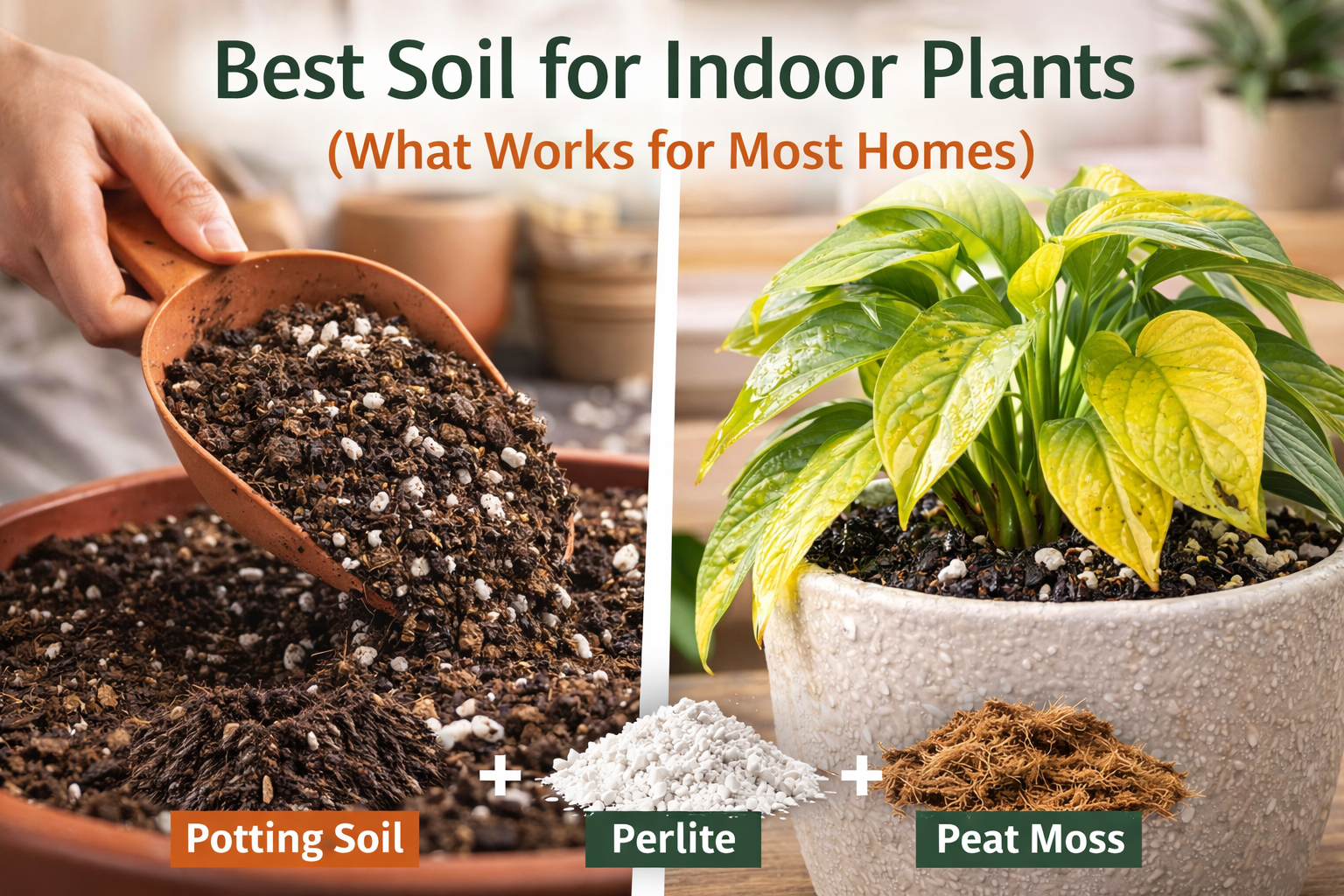
The Best Soil Mix for Most Indoor Plants
For general houseplants, a mix containing:
Potting soil (base)
Perlite (improves drainage)
Coco peat or peat moss (retains moisture)
works well in most homes.
This blend keeps roots balanced — not too wet, not too dry.
If watering has been confusing, this guide on how often to water indoor plants helps you adjust based on soil type.
Soil for Different Types of Indoor Plants
Succulents & Cacti
Need very fast-draining soil. Add extra perlite or sand.
Tropical Plants (Pothos, Peace Lily, ZZ Plant)
Prefer well-draining but slightly moisture-retentive soil.
Low Light Plants
Often need less watering because soil dries slowly in shade. If your home has limited sunlight, these low light indoor plants for apartments are easier to manage.
Signs Your Soil Needs to Be Changed
Soil smells sour
Water sits on top instead of draining
Yellow leaves appear frequently
Yellowing can also relate to watering imbalance. This article explains why plant leaves turn yellow in more detail.
How Often Should You Change Indoor Plant Soil?
Most indoor plants benefit from fresh soil every 12–18 months. Repotting refreshes nutrients and improves drainage.
You should now need to understand How to Repot Indoor Plants that keeps them grow beautiful.
Final Thoughts
The best soil for indoor plants is not complicated. A light, well-draining mix works for most homes. When soil drains properly, watering becomes easier and plants stay healthier.
Healthy soil supports strong roots — and strong roots support everything else.
I am the creator of LeafyAbode, a platform dedicated to helping people grow and care for indoor plants with confidence. I share practical, easy-to-follow guides on plant care, home gardening, and creating a green living space. My content is based on research, real experience, and a passion for making plant care simple for beginners and enthusiasts alike.
Post Disclaimer
The information contained in this post is for general information purposes only. The information is provided by Best Soil for Indoor Plants (What Works for Most Homes) and while we endeavour to keep the information up to date and correct, we make no representations or warranties of any kind, express or implied, about the completeness, accuracy, reliability, suitability or availability with respect to the website or the information, products, services, or related graphics contained on the post for any purpose.
2 thoughts on “Best Soil for Indoor Plants (What Works for Most Homes)”