
Best Soil for Indoor Plants: How to Choose or Mix the Right Dirt for House Plants
Choosing the best soil for indoor plants is one of the most important decisions you can make for your indoor garden, yet it is often overlooked by beginners. A houseplant may receive plenty of sunlight and proper water, but if the soil stays compact, drains poorly, or suffocates the roots, growth problems will inevitably follow.
In most indoor environments, common issues like yellowing leaves, slow growth, fungus gnat infestations, and fatal root rot begin below the surface inside dense, soggy dirt.
The good news? Finding good soil for indoor plants does not have to be complicated. Once you understand what makes a healthy house plant potting mix, you can easily select or mix the best dirt for any plant in your home.
Quick Summary: What Is the Best Soil for Indoor Plants?
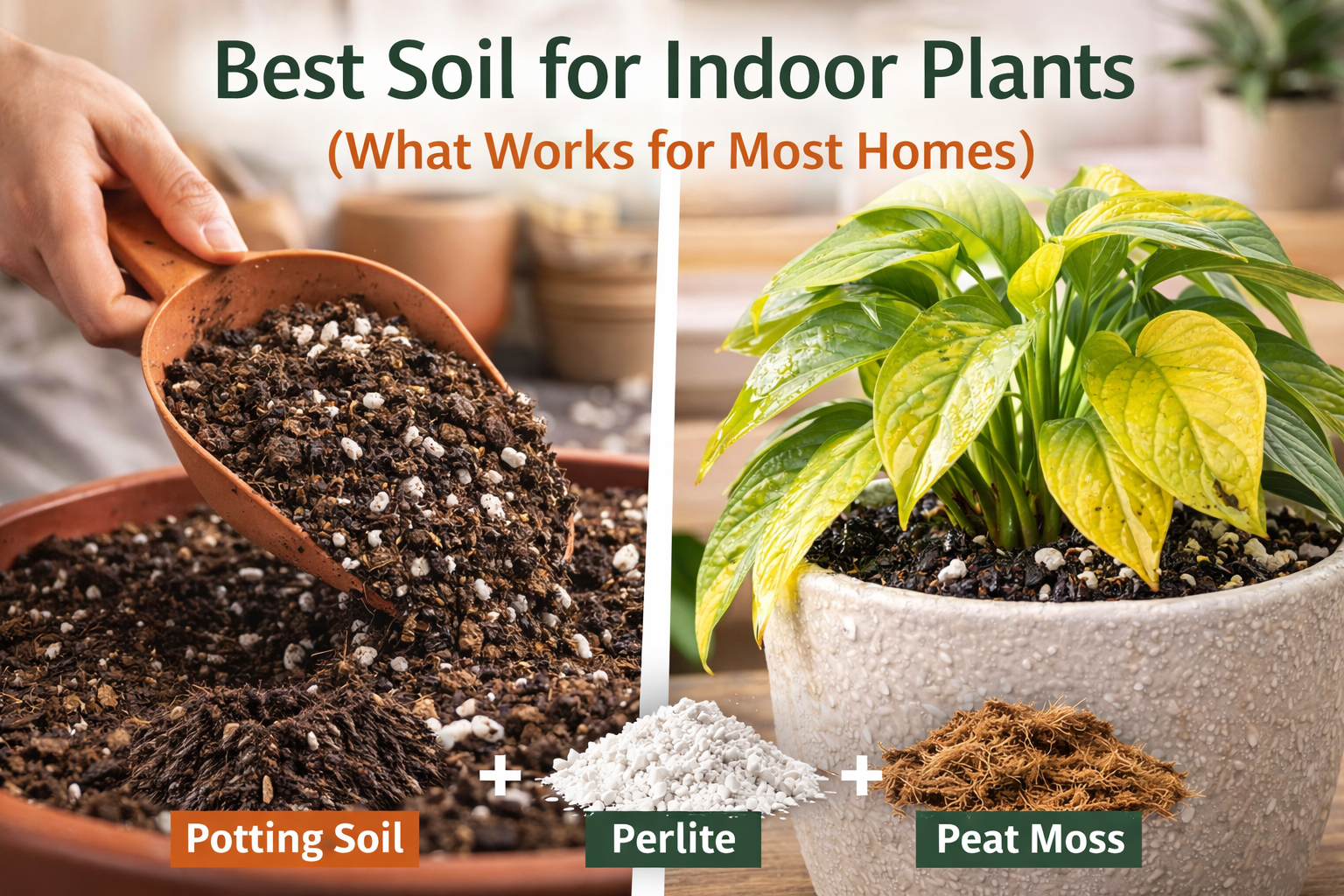
If you are looking for a quick answer, the best soil for house plants is not garden dirt—it is a lightweight, soil-less potting mix designed to retain mild moisture while letting excess water drain quickly.
The Ideal General-Purpose Potting Mix Recipe:
- 2 Parts Quality Potting Soil (Provides nutrients and structure)
- 1 Part Perlite (Improves aeration and drainage)
- 1 Part Coco Coir or Orchid Bark (Holds balanced moisture without clumping)
Why Soil Matters More for Indoor Plants Than Outdoor Gardens
Indoor plants live in a contained environment. Unlike outdoor plants, their roots cannot spread into vast ground soil to seek out fresh air, nutrients, or natural drainage channels.
The dirt trapped inside a pot directly dictates five vital health factors:
- Drainage speed after watering.
- Oxygen and airflow delivered to root systems.
- Moisture retention capabilities.
- Nutrient availability over time.
- Prevention of compaction and root suffocation.
Using heavy outdoor dirt in container pots leads to stagnant water accumulation. If you suspect poor soil moisture has already damaged your plant’s base, read our step-by-step guide on how to fix root rot in indoor plants.
What Makes Good Soil for Indoor Plants? (Key Ingredients)
To select or create the best dirt for indoor plants, look for a blend of these key ingredients:
- Base Potting Soil: Forms the foundation, holding essential organic nutrients.
- Perlite: Small white volcanic glass minerals that prevent compaction and increase root oxygenation.
- Coco Coir / Peat Moss: Natural fibers that absorb water evenly and release it slowly without making the soil soggy.
- Coarse Bark (Orchid Bark): Creates larger air pockets inside the pot, ideal for tropical epiphytes like Monsteras and Philodendrons.
- Organic Compost: Gently supplies natural micronutrients without scorching delicate plant roots.
Best Soil Mixes by Plant Type
Different house plants require distinct soil conditions depending on their natural habitats.
| Plant Category | Ideal Soil Blend Characteristics | Key Ingredients |
|---|---|---|
| Tropical Plants (Monstera, Pothos, Philodendron) | Chunkier, airy mix with medium moisture retention. | Potting soil + Perlite + Orchid bark |
| Succulents & Cacti (Echeveria, Aloe, Jade) | Fast-draining, coarse, low-moisture mix. | Cactus mix + Extra perlite + Coarse sand |
| Foliage & Snake Plants | Well-draining mix that dries moderately fast. | Standard potting soil + Perlite |
Special Considerations for Common Houseplants:
- Tropical House Plants: Tropicals thrive in humic, chunky soils with high porosity. If your indoor climate suffers from dry heating or air conditioning, combine good soil with techniques from our guide on how to increase humidity for indoor plants.
- Snake Plants: These hardy plants prefer loose dirt that dries completely between waterings. Note for pet owners: Before expanding your collection, review our safety breakdown on are snake plants toxic to pets.
7 Warning Signs Your Indoor Plant Soil Is Poor
If your house plants are struggling, check for these warning signs that indicate bad or degraded soil:
- Water sits on top of the soil for several minutes before soaking in.
- Soil remains soaking wet for more than 7–10 days after watering.
- Surface crusting or soil shrinking away from the sides of the pot.
- Fungus gnats hovering around the surface.
- A sour, musty odor coming from the drainage holes.
- Yellowing foliage and soft stems.
- Stunted or completely halted plant growth.
If your plant displays multiple signs of failure, consult our diagnostic checklist on how to save a dying indoor plant and learn why indoor plants stop growing.How Often Should You Replace Indoor Plant Dirt?
Indoor soil degrades over time as watering flushes out nutrients and breaks down organic matter into dense silt.
For optimal health, refresh the soil for most houseplants every 1 to 2 years. Spring is the ideal season for repotting as plants enter their active growing period. Follow our complete walkthrough on how to repot indoor plants without stress for seamless soil updates.
3 Common Soil Mistakes Beginners Should Avoid
- Using Garden Dirt Indoors: Outdoor garden soil contains heavy clay that compacts tightly in pots, suffocating indoor roots and introducing wild pests.
- Ignoring Container Drainage: Even the best potting soil will fail if your pot lacks drainage holes. Learn why this matters in our guide on do indoor plants need drainage holes.
- Confusing Overwatering with Poor Soil: Overwatering is often a soil problem in disguise. Learn how to diagnose moisture levels with our guide on overwatering vs underwatering indoor plants.
Frequently Asked Questions (FAQ)
What is the best soil for indoor plants?
The best soil for indoor plants is a soil-less potting mix made of potting soil, perlite, and coco coir or bark. This blend balances aeration, moisture retention, and excess drainage.
Can I use regular dirt or garden soil for house plants?
No. Regular garden soil is too dense for container growing, compacts easily when watered indoors, and often harbors soil-borne pests or diseases.
Why does my plant soil stay wet for too long?
Soil stays wet due to poor drainage, heavy clay content, lack of perlite, oversized pots, or using containers without drainage holes.
Summary Checklist
Before buying or mixing dirt for house plants, ensure it fulfills three core needs: fast drainage, continuous root aeration, and balanced moisture retention. Upgrading your soil quality is often the fastest way to transform struggling foliage into vibrant, thriving indoor greenery.
I am the creator of LeafyAbode, a platform dedicated to helping people grow and care for indoor plants with confidence. I share practical, easy-to-follow guides on plant care, home gardening, and creating a green living space. My content is based on research, real experience, and a passion for making plant care simple for beginners and enthusiasts alike.
Post Disclaimer
The information contained in this post is for general information purposes only. The information is provided by Best Soil for Indoor Plants: How to Choose or Mix the Right Dirt for House Plants and while we endeavour to keep the information up to date and correct, we make no representations or warranties of any kind, express or implied, about the completeness, accuracy, reliability, suitability or availability with respect to the website or the information, products, services, or related graphics contained on the post for any purpose.
6 thoughts on “Best Soil for Indoor Plants: How to Choose or Mix the Right Dirt for House Plants”