
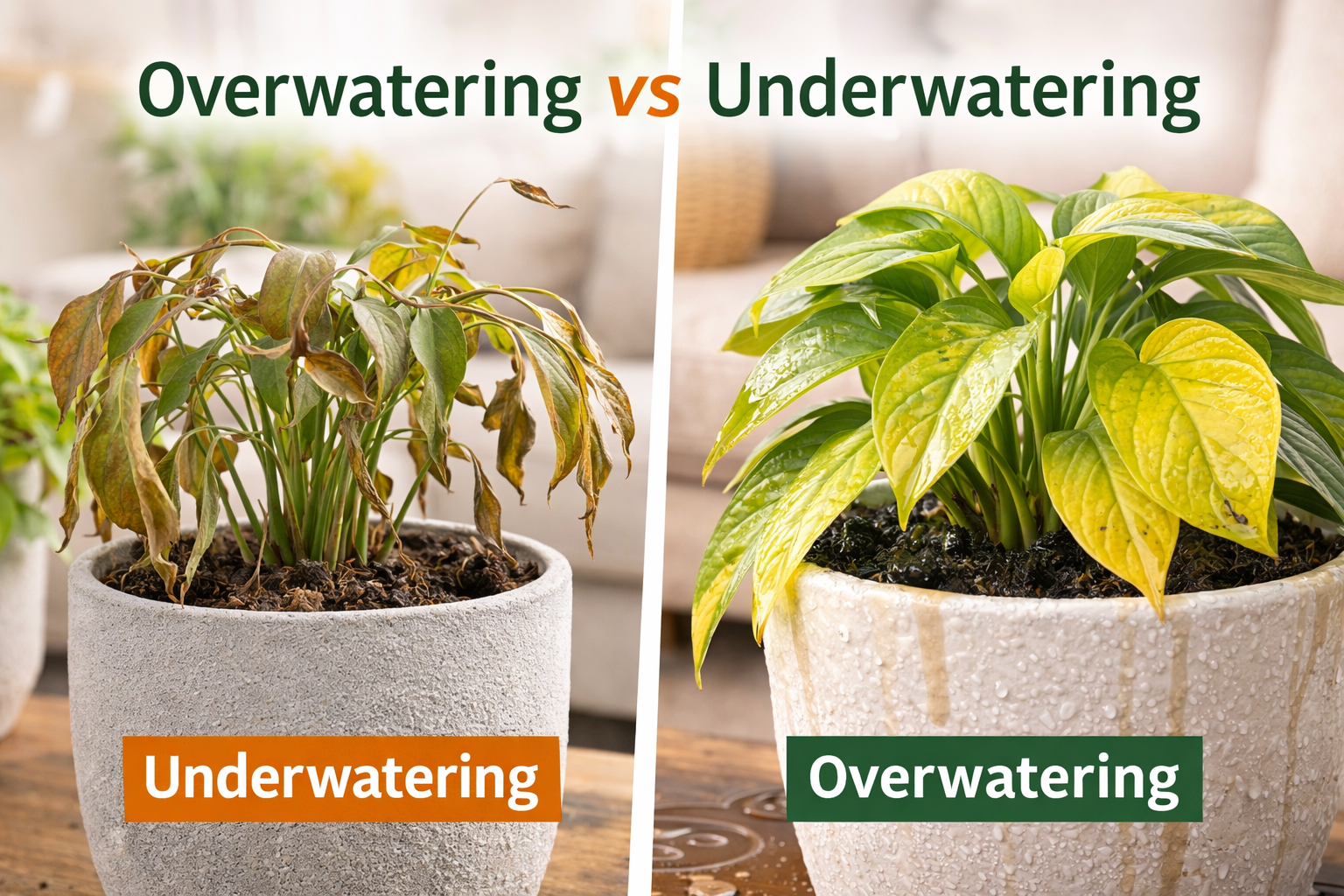
Watering mistakes are one of the most common reasons indoor plants struggle. Many plant owners worry they are not watering enough, but in reality, overwatering causes more problems than underwatering.
The challenge is that overwatered and underwatered plants can show similar symptoms, which makes diagnosis confusing. This guide explains the differences clearly, so you can understand what your plant is experiencing and fix it with confidence. If you’re still unsure, this guide on indoor plant care mistakes beginners make covers common watering errors.
If you’re still learning the basics, this indoor plant care guide explains how watering, light, and soil work together.
What Happens When You Overwater Indoor Plants?
Overwatering occurs when soil stays wet for too long. Roots need oxygen to stay healthy, and constantly wet soil prevents air from reaching them.
As a result, roots weaken and stop absorbing nutrients properly. Leaves may turn yellow even though the plant is receiving plenty of water.
In many cases, excess moisture builds up because the pot has no outlet for water — which is why understanding whether indoor plants need drainage holes is so important.
Common signs of overwatering
Yellow or pale leaves
Soft or mushy stems
Soil that stays wet for days
Wilting despite moist soil
Mold or fungus on the soil surface
Overwatering usually happens because watering is done on a schedule instead of checking soil moisture. Also make sure to know How to Repot Indoor Plants
What Happens When You Underwater Indoor Plants?
Underwatering occurs when soil dries out completely for long periods. Roots struggle to deliver enough moisture to leaves, which causes stress.
Leaves lose firmness and may curl or drop. However, the soil usually feels very dry in these cases. Water imbalance can sometimes appear as dry edges, and this article on brown tips on indoor plant leaves helps you identify the root cause.
Common signs of underwatering
Drooping leaves
Dry, compact soil
Brown or crispy leaf edges
Slow or paused growth. Growth problems can also be linked to watering mistakes, which are explained in this guide on why indoor plants stop growing.
Underwatering is generally easier to fix than overwatering
Overwatering vs Underwatering: Key Differences
| Feature | Overwatering | Underwatering |
|---|---|---|
| Soil feel | Wet or soggy | Dry and crumbly |
| Leaf texture | Soft, yellow | Dry, crispy |
| Wilting | Yes, with wet soil | Yes, with dry soil |
| Recovery | Slower | Faster |
This comparison helps identify the issue quickly.
How to Tell Which One Is Affecting Your Plant
Follow these simple steps:
Check the soil first
Wet soil usually points to overwatering. Dry soil suggests underwatering.Look at the leaves
Yellow, soft leaves often indicate excess water. Dry, curled leaves usually indicate lack of water.Think about your routine
Frequent watering increases the risk of overwatering.
If you’re unsure how often plants should be watered, this guide on how often to water indoor plants explains a simple rule that works.
How to Fix Overwatered Indoor Plants
Stop watering immediately
Allow soil to dry partially
Check drainage holes
Remove standing water from saucers
Trim damaged leaves
Recovery may take time, but many plants bounce back once conditions improve.
How to Fix Underwatered Indoor Plants
Water thoroughly until excess drains out
Break up compacted soil gently
Resume regular moisture checks
Plants usually recover quickly once watered properly.
Can Yellow Leaves Be Caused by Both?
Yes. Yellow leaves appear in both cases, which is why diagnosis matters.
This detailed guide explains why plant leaves turn yellow and how watering and light play a role.
How to Prevent Watering Problems in the Future
Check soil moisture before watering
Use pots with drainage holes
Adjust watering based on light and season. Plants often require more frequent watering during warmer months, which is discussed further in this guide on indoor plant care in summer.
Observe plants weekly
Choosing forgiving options like these indoor plants for beginners also reduces watering stress.
Final Thoughts
Most watering problems are not permanent. Once the difference between overwatering and underwatering is understood, plant care becomes much easier.
By observing soil, leaves, and routine habits, you can respond calmly and keep indoor plants healthy over time.

I am the creator of LeafyAbode, a platform dedicated to helping people grow and care for indoor plants with confidence. I share practical, easy-to-follow guides on plant care, home gardening, and creating a green living space. My content is based on research, real experience, and a passion for making plant care simple for beginners and enthusiasts alike.
Post Disclaimer
The information contained in this post is for general information purposes only. The information is provided by Overwatering vs Underwatering Indoor Plants (How to Tell the Difference) and while we endeavour to keep the information up to date and correct, we make no representations or warranties of any kind, express or implied, about the completeness, accuracy, reliability, suitability or availability with respect to the website or the information, products, services, or related graphics contained on the post for any purpose.
6 thoughts on “Overwatering vs Underwatering Indoor Plants (How to Tell the Difference)”