
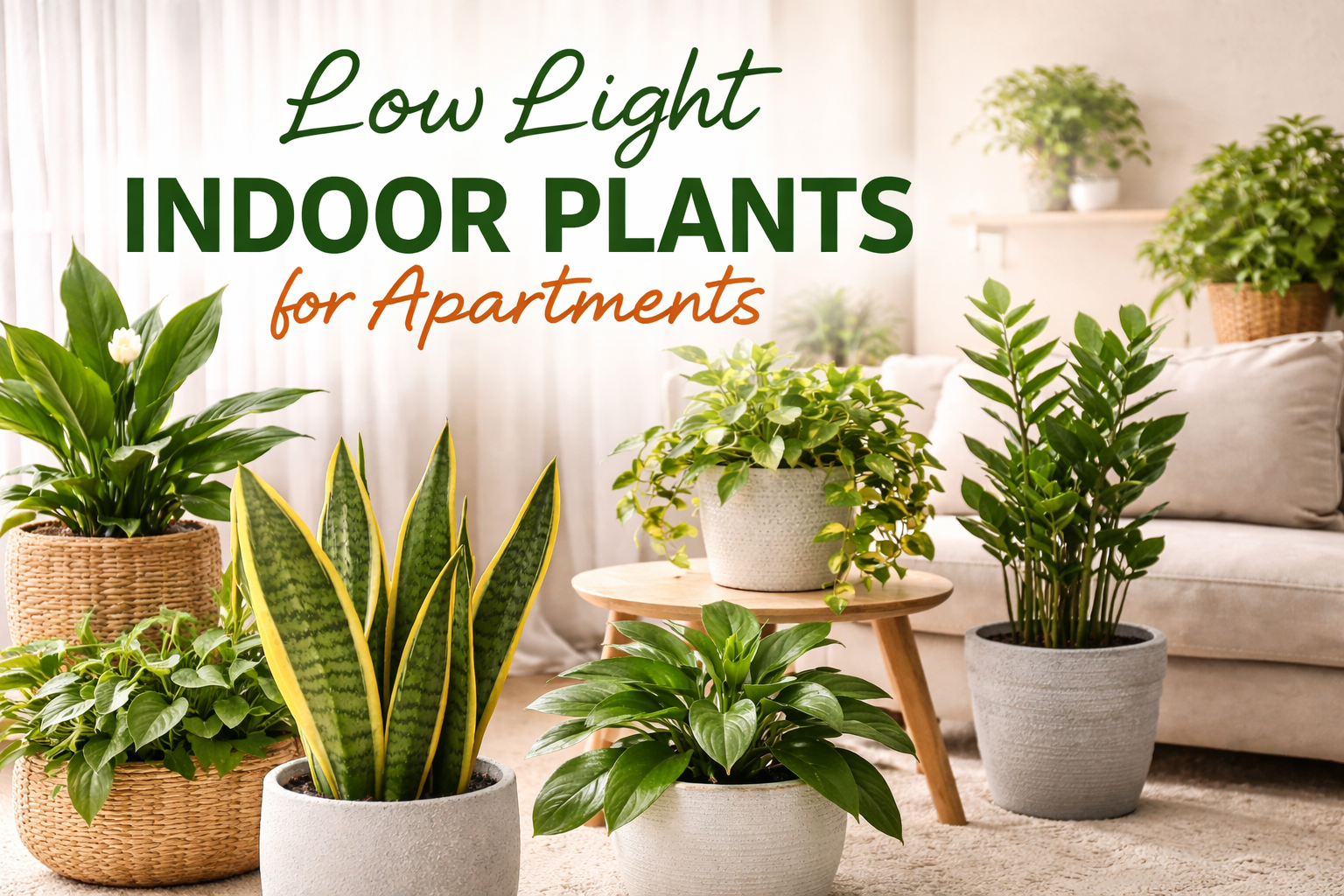
Living in an apartment often means limited sunlight. Many homes receive indirect light, shaded windows, or only a few hours of sun each day. Because of this, beginners often worry that indoor plants won’t survive in their space.
The good news is that many indoor plants grow well in low light. With the right plant choices and a few simple care habits, even apartments with minimal sunlight can support healthy greenery.
This guide about low light indoor plants will help you understand what low light really means and which indoor plants are best suited for apartment living. These plants are also great options if you’re searching for the best indoor plants for small apartments.
What Does “Low Light” Mean Indoors?
Low light does not mean complete darkness. Instead, it usually refers to areas that receive indirect or filtered sunlight, or rooms that are a few feet away from windows.
Common low-light situations include:
North-facing windows
Rooms with curtains or blinds
Apartments surrounded by other buildings
Corners that don’t receive direct sun
Even in these conditions, many plants can grow steadily when cared for correctly.
Best Low Light Indoor Plants for Apartments
The plants below are known for their ability to tolerate low light and adapt well to indoor environments.
Snake Plant
Snake plants are one of the most reliable choices for apartments. They tolerate low light, missed waterings, and dry indoor air.
They grow slowly, which makes them perfect for small spaces. Because they store water in their leaves, they should be watered only when the soil feels dry.
ZZ Plant
ZZ plants are extremely hardy and ideal for beginners. They grow well in low to moderate light and prefer infrequent watering.
Their thick roots store moisture, which allows them to survive periods of neglect. This makes them a great option for busy apartment dwellers.
Pothos
Pothos plants adapt easily to low light and are known for their trailing vines. They can grow in hanging baskets or on shelves, adding greenery without taking up floor space.
While pothos grows faster in brighter light, it still survives well in shaded areas when watered properly.
Peace Lily
Peace lilies tolerate low light better than many flowering plants. Although they may bloom less often in shade, their glossy green leaves remain attractive.
They also show clear signs when they need water, which helps beginners avoid overwatering.
Chinese Evergreen
Chinese evergreens are popular indoor plants because of their decorative leaves and tolerance for low light.
They prefer consistent care and indirect light. Sudden changes in placement should be avoided, as these plants like stable conditions.
Cast Iron Plant
As the name suggests, cast iron plants are very tough. They grow slowly and tolerate low light, temperature changes, and irregular watering.
This plant works well in corners or hallways where sunlight is limited.
How to Care for Low Light Indoor Plants
Low light plants have slightly different needs compared to sun-loving plants.
Adjust watering habits
Plants in low light use water more slowly. Because of this, soil stays moist longer. Always check soil moisture before watering. If watering feels confusing, this guide on how often to water indoor plants explains a simple method that works in most homes.
Expect slower growth
Low light plants grow at a relaxed pace. Slow growth is normal and does not mean the plant is unhealthy.
Avoid frequent movement
Moving plants often can stress them. Once you find a suitable spot, allow the plant time to adjust.
Common Mistakes With Low Light Indoor Plants
Even hardy plants can struggle if common mistakes are repeated.
Overwatering
This is the most common issue. Because soil dries slowly in low light, excess water can damage roots.
Expecting fast growth
Low light plants focus on survival rather than rapid growth. Patience is essential.
Placing plants in complete darkness
Although they tolerate low light, plants still need some indirect light to stay healthy.
Signs Your Low Light Plant Needs More Light
While these plants are tolerant, they still communicate when light is insufficient.
Watch for:
Pale or faded leaves
Weak, leggy growth
Leaves turning yellow over time
Yellow leaves can also be a sign of light stress, and this guide explains why plant leaves turn yellow and how to fix the problem.
Can Indoor Plants Survive Without Sunlight?
Plants cannot survive without any light at all. However, many low light plants adapt to artificial lighting and indirect daylight.
Placing plants near windows, even without direct sun, usually provides enough light for healthy growth.
Are Grow Lights Necessary for Apartments?
Grow lights are optional. They can help in very dark rooms, but they are not required for most low light indoor plants.
For beginners, choosing the right plant is usually enough.
How Low Light Plants Fit Into Basic Plant Care
Low light is only one part of healthy plant care. Watering, soil, and drainage still matter just as much. Understanding basic care habits makes plant selection easier, and this indoor plant care guide covers watering, light, and soil needs in detail.
Final Thoughts
Low light does not mean you have to give up on indoor plants. Many apartment-friendly plants thrive with minimal sunlight when cared for patiently and consistently.
By choosing tolerant plants, watering carefully, and observing changes slowly, you can enjoy healthy indoor greenery even in shaded spaces.
If you’re just starting out, selecting forgiving plants makes the experience much easier. These indoor plants for beginners are especially helpful when learning how to care for plants in real homes.

I am the creator of LeafyAbode, a platform dedicated to helping people grow and care for indoor plants with confidence. I share practical, easy-to-follow guides on plant care, home gardening, and creating a green living space. My content is based on research, real experience, and a passion for making plant care simple for beginners and enthusiasts alike.
Post Disclaimer
The information contained in this post is for general information purposes only. The information is provided by Low Light Indoor Plants for Apartments (Easy Plants That Thrive Indoors) and while we endeavour to keep the information up to date and correct, we make no representations or warranties of any kind, express or implied, about the completeness, accuracy, reliability, suitability or availability with respect to the website or the information, products, services, or related graphics contained on the post for any purpose.
5 thoughts on “Low Light Indoor Plants for Apartments (Easy Plants That Thrive Indoors)”