
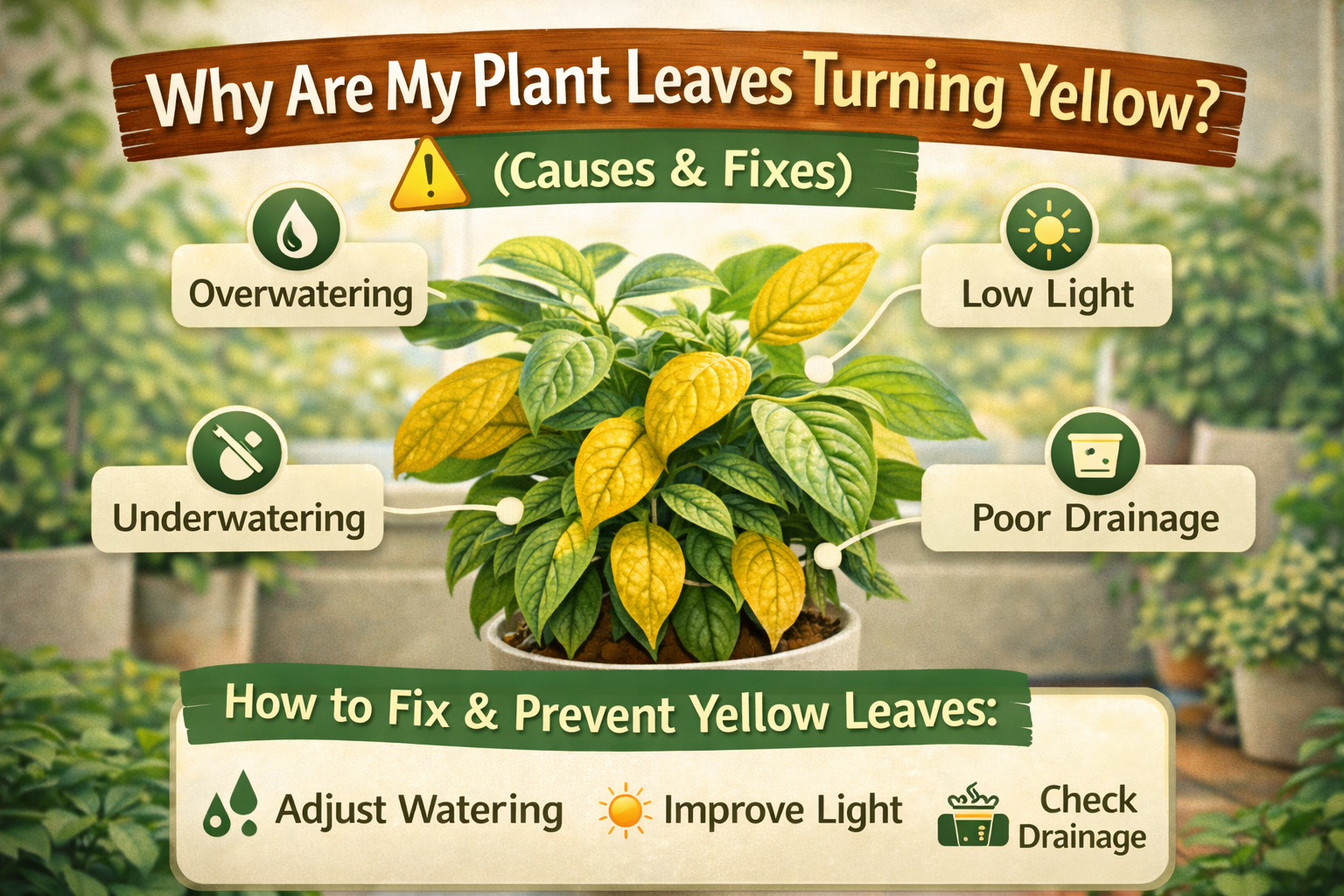
Seeing yellow leaves on your indoor plant can be worrying, especially when you’ve been trying to care for it properly. The good news is that yellow leaves are one of the most common plant signals, and in most cases, they are easy to fix.
Yellowing does not usually mean your plant is dying. Instead, it’s a sign that something in its environment needs a small adjustment. Once the cause is identified, plants often recover well with a little patience.
If you are new to houseplants, understanding basic care makes troubleshooting much easier, and this indoor plant care guide explains light, watering, and soil needs in detail.
Is It Normal for Plant Leaves to Turn Yellow?
Yes, in some situations, yellow leaves are completely normal.
Plants naturally shed older leaves as they grow. If only one or two older leaves near the bottom turn yellow while new growth looks healthy, there’s usually no reason to worry.
However, when several leaves turn yellow at once, or when younger leaves change color, it’s a sign that the plant is under stress and needs attention. Leaf issues often result from basic mistakes, which are explained in this guide on indoor plant care mistakes beginners make.
The Most Common Reasons Plant Leaves Turn Yellow
Overwatering (Most Common Cause)
Overwatering is the leading cause of yellow leaves in indoor plants. When soil stays wet for too long, roots cannot breathe properly. As a result, they struggle to absorb oxygen and nutrients.
Common signs of overwatering include:
- Yellow, soft leaves
- Soil that stays wet for days
- Wilting even though the soil is moist
Many beginners water out of care, not realizing that plants need air in the soil as much as they need water.
Many yellow leaf problems start with incorrect watering, which is why knowing how often to water indoor plants makes such a big difference.
Underwatering
Underwatering can also cause leaves to turn yellow, especially when plants remain dry for extended periods.
When soil becomes too dry, roots cannot supply enough moisture to the leaves. This stress causes discoloration and drooping.
Unlike overwatering, underwatering usually comes with:
- Dry, compact soil
- Crispy or curling leaves
- Slower growth
Lack of Light
Light plays a major role in leaf color. When plants don’t receive enough light, photosynthesis slows down. As a result, leaves may lose their green color and turn yellow.
Plants placed far from windows or in dark corners are more likely to experience this issue. Even low-light plants still need some indirect light to stay healthy.
Poor Drainage or Wrong Pot
Pots without drainage holes trap excess water at the bottom. This creates soggy soil conditions that damage roots and lead to yellow leaves.
Heavy or compacted soil can cause the same problem by holding too much moisture. Proper drainage allows excess water to escape and keeps roots healthy.
Nutrient Imbalance
Over time, soil nutrients can become depleted, especially in potted plants. A lack of essential nutrients may cause gradual yellowing.
On the other hand, using too much fertilizer can also harm plants. Excess salts in the soil damage roots and result in yellow leaves. Balance is key. If nutrient deficiency is the cause, this beginner guide on when and how to fertilize indoor plants explains how to restore healthy growth safely.
How to Identify the Real Cause (Simple Diagnosis Guide)
To identify why leaves are turning yellow, follow these simple steps:
- Check the soil moisture
If the soil feels wet, overwatering is likely. If it feels dry, underwatering may be the issue. - Look at which leaves are affected
Older leaves usually indicate natural aging. New leaves turning yellow suggest stress. - Review recent changes
Moving the plant, changing watering habits, or seasonal changes can all affect plant health.
This process makes troubleshooting much easier.
How to Fix Yellow Leaves (Step-by-Step)
Adjust watering habits
Water only when the top layer of soil feels dry. This simple method prevents most watering problems.
Improve light exposure
Move the plant closer to a window with bright, indirect light. Avoid sudden exposure to harsh sunlight.
Check drainage
Make sure the pot has drainage holes and that excess water can escape freely.
Remove damaged leaves
Trim severely yellow leaves so the plant can focus energy on healthy growth.
Be patient
Recovery takes time. New growth is a better sign of health than old leaves returning to green.
When Yellow Leaves Are NOT a Problem
Yellow leaves may appear during:
- Seasonal changes
- Plant adjustment after repotting
- Normal growth cycles
In these cases, minimal intervention is needed.
How to Prevent Yellow Leaves in the Future
- Water based on soil moisture, not schedules
- Place plants in suitable light conditions
- Use pots with proper drainage
- Observe plants weekly instead of daily
Small, consistent habits make a big difference. Following simple routines from a complete indoor plant care basics guide helps prevent most leaf problems before they start.
Frequently Asked Questions
Can yellow leaves turn green again?
Usually no. Once a leaf turns yellow, it will not regain its color. Focus on new healthy growth instead.
Should I remove yellow leaves?
Yes, trimming yellow leaves helps the plant redirect energy to healthier parts.
How long does recovery take?
Most plants show improvement within a few weeks once the issue is corrected.
Final Thoughts
Yellow leaves are not a sign of failure. They are a plant’s way of communicating its needs. By understanding common causes and making small adjustments, most indoor plants recover and continue to grow well.
If you’re unsure where to start, reviewing basic indoor plant care principles can help prevent many of these issues in the future.
Choosing forgiving plants also reduces stress, especially for beginners, and these indoor plants for beginners are much easier to care for.

I am the creator of LeafyAbode, a platform dedicated to helping people grow and care for indoor plants with confidence. I share practical, easy-to-follow guides on plant care, home gardening, and creating a green living space. My content is based on research, real experience, and a passion for making plant care simple for beginners and enthusiasts alike.
Post Disclaimer
The information contained in this post is for general information purposes only. The information is provided by Why Are My Plant Leaves Turning Yellow? (Causes & Fixes) and while we endeavour to keep the information up to date and correct, we make no representations or warranties of any kind, express or implied, about the completeness, accuracy, reliability, suitability or availability with respect to the website or the information, products, services, or related graphics contained on the post for any purpose.
9 thoughts on “Why Are My Plant Leaves Turning Yellow? (Causes & Fixes)”